Absentee Command Weakens Roots
Relocating family leadership to England created disconnection and weakened operational resilience in core markets.
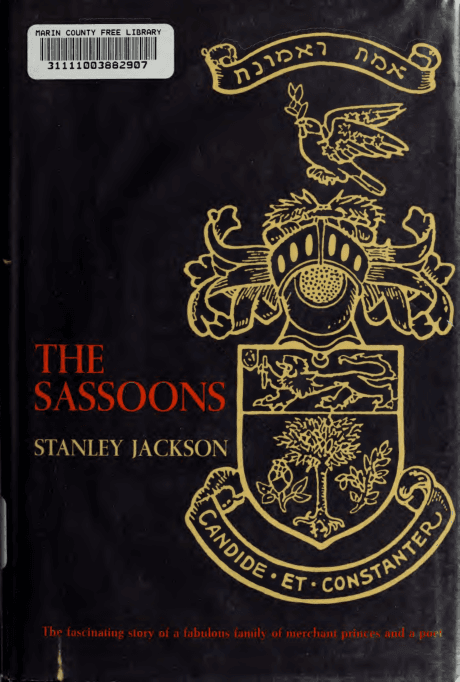
Jackson, Stanley, 1910-
40 highlights · 10 themes · 4 cited people/companies
A merchant dynasty led by David Sassoon, distinguished by tightly-knit family control, adaptive risk-taking, and a networked, trust-based operating style spanning India, China, and beyond.
Relocating family leadership to England created disconnection and weakened operational resilience in core markets.
Periods of speculative mania and following the crowd led to dangerous overreach—even for the Sassoons and their peers.
“David Sassoon had soon discovered the advantages of having his capital and interest repaid in goods which he could then resell for an additional profit. His policy was more than justified, but it demanded harsh routine. In this new country he had first to master a primitive system of weights and measures which often varied from district to district. With a world market in prospect far beyond his previous experience,…”
“As expected, the quiet and secretive Elias was careful with his money and inclined to play a lone hand. Within a few years, he was able to pay over £2,000 for shares in the China Steam Navigation Company. He also snapped up sites on the Shanghai mud flats at agricultural prices, sometimes as low as £90 an acre. (It would soar to £300,000 an acre by the time his grandson, Sir Victor, came to develop the Bund!) He gue…”
“The cotton magnate and first Parsee baronet, Sir Jamsetjee Jejeebhoy, once declared emphatically that 'the chief cause of David Sassoon's success was the use he made of his sons'. He trained them to be chorus masters, with himself as conductor. Dressed in the flowing robes and turbans of Baghdad and always moving respectfully behind their parent, they looked hardly distinguishable. But differences in age and status…”
“It made him hesitate when his sons pointed excitedly to the profits being made in cotton. He declined to be hurried.”
“Often it took five months to reach Bombay from England, but the new steamship services would surely send up the values ofall foreshore property. With his first profits David Sassoon therefore began to buy up wharfages in Bombay. He was following in the tracks of the Parsees, but with one essential difference. They acted mainly as local middlemen and used their assets to buy land or lend money to the peasants. He pre…”
“By the end of the century, one-third of India's half million factory workers were in cotton, with the Sassoon mills or their associated concerns among the largest employers. E. D. Sassoon & Company had several thousand hands on their payroll with an output, man for man, far higher than that of any other plant in Bombay and even several in Lancashire. Jacob had shown foresight in briefing his brothers in London to ex…”
“They had no taste for pioneering. David Sassoon followed the Gubbays, Ezras and Ezekiels to India. He had only sent his son, Elias, to China after the Jardines and others had secured a foothold in the Treaty Ports. From the beginning and almost by instinct, he conformed to the classic tradition by launching his millions on the second wave.”
“Production remained a key problem in all the Sassoon mills. The manufacturing boom had stimulated such a demand that it was not always practical to wait for new factories to be built and equipped. Semi-derelict businesses - one of them had been wound up four times in the past twenty years - were therefore bought up cheaply. Ancient plant operated by steam engines and wheezy boilers was scrapped, and the latest machi…”
“There were many larger and older-established China traders than David Sassoon & Sons, but none more flexible or so diversified. They became shippers without the risks of shipowning, and acted as brokers or bankers to smaller traders in need of capital. They also started up as commission agents, buying and selling cargoes for others who discovered that the Sassoon turnover guaranteed them excellent cargo space at rea…”
“David Sassoon was, however, wise enough to see the dangers of becoming too inward-looking and parochial. He endowed the Gothic-style Sassoon General Hospital at Poona for the benefit of all sects and creeds of Indians, as well as Jewish patients. Built on two floors with accommodation for two hundred men and women, it was equipped on the most modern Western scale, together with a hostel for doctors and nurses. Separ…”
“His uncle had now become so addicted to bridge that he never travelled without his own folding card-table. One of his first gifts to the Prince of Wales was a set of ivory baccarat counters embossed with the fleur-de-lis. The Heir always tucked it into his crocodile dressing-case before going on his travels. He used this set for the celebrated party at Tranby Croft in St Leger Week, 1890, when Sir William Gordon-Cum…”
“'We went to the office (i.e. Reuben and I) yesterday at 11 and remained till 1, while he signed the Hebrew and Arabic letters. While we were there, Bishop called and offered some Persian opium and he said there was a margin of more than $100 between the price here and that in Hong Kong, so we thought we might as well buy a small lot and make a little money. (Five days later they bought 67 chests.”
asuycdg6.org
Shares East India Company, British, and China.
Patrick McGee
Shares Hong Kong, China, and Singapore.
Ebbe Dommisse
Shares Hong Kong, China, and Singapore.
Murat Lama
Shares China and Singapore.
Thomas Veszelits
Shares China and Singapore.
Cheng Hongtai
Shares Hong Kong and China.
“His uncle had now become so addicted to bridge that he never travelled without his own folding card-table. One of his first gifts to the Prince of Wales was a set of ivory baccarat counters embossed with the fleur-de-lis. The Heir always tucked it into his crocodile dressing-case before going on his travels. He used this set for the celebrated party at Tranby Croft in St Leger Week, 1890, when Sir William Gordon-Cumming was caught cheating. The scandal was meat and drink to the righteous Souls who gleefully suggested 'Ich Deal' as an apter motto for the Heir to the Throne. Reuben Sassoon had been a member of that gaming party and was, in fact, responsible for issuing the baccarat chips. He had also witnessed the document in which Gordon-Cumming had solemnly pledged himself never again to play cards for money.”
“'We went to the office (i.e. Reuben and I) yesterday at 11 and remained till 1, while he signed the Hebrew and Arabic letters. While we were there, Bishop called and offered some Persian opium and he said there was a margin of more than $100 between the price here and that in Hong Kong, so we thought we might as well buy a small lot and make a little money. (Five days later they bought 67 chests.”
“The Rothschilds arrived at the Court of St James's from the ghetto of Frankfurt-am-Main, where a small trader in old coins and medals became factor to the Landgrave of Hesse-Hanau and laid the foundations of a spectacular banking empire. They remained a close-knit clan ofEuropeans. The Sassoons were courtiers and merchant princes from their earliest days. Their corporate personality came to flower in the East without always transplanting too smoothly, despite Park Lane mansions, grouse moors in Scotland and a persistent entry at Eton and Christ Church, Oxford. Consequently, their destiny would prove more convulsive and off-centre than that of the less aristocratic, but relatively predictable, House of Rothschild.”
“The caliphs and viziers turned increasingly to these prosperous infidels when they needed funds for some private use which the Sublime Porte at Constantinople might not always have approved. It finally became practical to appoint the lay leader of the Jewish community as Sarraf Bashi or Chief Banker, who would also be responsible for collecting taxes from his co-religionists. Known as 'Nasi' (Prince of the Captivity), he was usually the wealthiest and most respected Jew in Baghdad. It was a satisfactory arrangement all round. The ruler had a shrewd adviser whom he would flatter with ceremonial honours and greet as 'brother', while the Jews had a friend at Court to air their communal grievances or protest when some venal official grew too rapacious.”
“Like all provident men of business, the Sassoons kept only the most valuable portables in their home, and these under constant guard, but their city bazaars and booths were always stocked from floor to ceiling. Bales of bright silks were shipped hundreds of miles on rafts by the mercers of Bushire; India and far-off Kabul sent cotton goods, horses, gold and silver ornaments, while coffers of spices and trinkets of every kind arrived by sea, or more usually by camel caravan, from Java and Singapore. Much was sold locally, but for generations the family had steadily built up an export business in hides, dates, metals and, above all, wool. As soon as the sheep-shearing began, their agents would be active among the Bedouin tribes of the interior who sold their wool in exchange for cotton garments, shoes and cameos.”
“Several took panic and either abandoned their faith or decided to leave Baghdad. A number made for the Persian Gulf and set sail for New South Wales to found a small Arabic-speaking colony in Sydney.”
“David Sassoon was among those who declined to stand. He acted instead as the community's unofficial leader and spokesman, relying on his father's name and prestige. The family's fortune was still considerable, but much of it dispersed in caravanserais throughout Asia, as the Pasha was perfectly aware. Daud might tighten the screws by taxation but obviously needed subtler methods. He therefore planned to arrest selected Jews whose ransom would probably be paid by their richer brethren.”
“The aged Sheikh was also becoming active in the complicated financial network that radiated from Baghdad. Arab shipmasters and fierce-looking hillmen from the Mongolian trade routes began to arrive in Bushire with goods and the currency for transactions which the Sheikh Sason or others close to him had initiated. Several traders, who had long made use of the family's counting-house and its credit facilities, co-operated, but others were more cautious. Reports of spies in Bushire confirmed that Daud had not entirely given up hope of kidnapping his enemy.”
“He started active trading from a very small quayside warehouse, owned by Zacharia. It was rat-free but far removed from the spacious ancestral serdab in Baghdad which at times bulged with merchandise like an Aladdin's Cave. The dhow captains slowly came to know him as a man of honour whose word could be trusted even in the smallest enterprise. He bought wharf space and rented it to traders who arrived by sea or overland to sell their goods and stock up. He added steadily to his capital but preferred to act as a middleman, particularly for Bombay merchants, rather than compete independently with local dealers who had more substantial reserves. It was the birth of a lifelong antipathy to all gambling transactions, however tempting. Cautiously he began to export a few horses, dates, sheepskins and small consignments of pearls to India, content with the lighter cargoes of silks and metal-ware that came back. With neither boats nor camels to distribute goods, he wisely decided to limit his imports.”
“Often it took five months to reach Bombay from England, but the new steamship services would surely send up the values ofall foreshore property. With his first profits David Sassoon therefore began to buy up wharfages in Bombay. He was following in the tracks of the Parsees, but with one essential difference. They acted mainly as local middlemen and used their assets to buy land or lend money to the peasants. He preferred to nuzzle the warmth of foreign trade and was quickly among the captains of the bulging dhows which poured ceaselessly into the Bay of Bengal. By offering them dock space, he automatically had the first pick of goods before they reached the city booths. Many a trader would be stranded in port and short of money while waiting for the monsoons to pass. When they were ready to sail home, half their fresh cargoes would often be Sassoon merchandise. Some who had sold their own wares in Bombay were also tempted to invest in wools, gay chintzes, dye-stuffs and turquoises for the return journey. For this they needed additional capital or the services of a trusted go-between. Sassoon was at hand in both capacities.”
“When transactions did not turn out well, some preferred to store their unsold goods or sell on a commission basis rather than sacrifice them to the sly sharks on the waterfront. They were eager to load their caravans with merchandise for the long trek back to Afghanistan and even to Russia beyond. With little expectation of returning for many months from their orchards and bazaars, most were desperate for the credit which few Parsees cared to extend or only at ruinous rates of interest. David Sassoon was available and sympathetic. He accepted risks which seemed foolhardy to conservative British firms and even less attractive to the local moneylenders who liked to have their victims, mainly illiterate smallholders, within easy grasp.”
“David Sassoon had soon discovered the advantages of having his capital and interest repaid in goods which he could then resell for an additional profit. His policy was more than justified, but it demanded harsh routine. In this new country he had first to master a primitive system of weights and measures which often varied from district to district. With a world market in prospect far beyond his previous experience, he familiarized himselfwith a wider range of prices and commodities and even started to explore the intricacies of the Stock Exchange. He acquired a working command of Hindi which he spoke with the measured diction ofone naturally fastidious with words. He was almost as sparing in the use ofHebrew and Arabic, his two natural languages. A number of his letters have been preserved; they are incisive, very much to the point, and written in a clear script unusually free from the typical flourishes and affectations of the period.”
“This triumvirate preferred to accept crushing personal burdens rather than delegate to strangers. Their meagre staff of warehouse clerks was recruited exclusively from ex-Baghdad Jews who would seldom be taken into private counsel. Many an ambitious employee, even when related to the family by marriage, would discover painfully that 'David Sassoon & Sons' meant precisely that. In policy and business routine, the young men reacted to their father and each other with almost a conditioned reflex. Physically, however, they had little in common except the hereditary mouth which turned down at the corners and often gave strangers an unfortunate impression of disdain.”
“Cotton and opium; these two keys were at last unlocking the treasure which would soon make the firm a power from the Thames to the Tigris, and clear across Asia to the delta of the yellow Pei-ho itself.”
“India had grown raw cotton for centuries, using hand-looms for her local needs. The development of spinning in Lancashire created a keener demand, but transport to the coast was mainly by bullock carts over bad roads. Cleaning and ginning remained primitive. The cotton was often stored in pits plastered with cow-dung, although the East India Company had bought gins from the United States to improve cleansing.”
“Arab traders first introduced opium to the Chinese as a specific for gastric disorders and an antidote to leprosy. Portuguese seamen of the seventeenth century had then given the mandarins and a few rich officials a fashionable taste for yang yien (foreign smoke). With rapid national addiction, the drug developed into one of the East India Company's most profitable commodities. It became a very convenient medium of exchange when the Company began buying more tea and silk from the Cantonese who insisted on being paid in silver. Since exports of cotton could not balance the trade, opium was the only answer. The Imperial Government seemed less concerned with the growth of the habit than the huge silver drain to pay for it. They retaliated half-heartedly with an ineffectual ban on imports.”
“The East India Company's food ship Lord Amherst had docked at Shanghai in 1832 with members of a trade mission eager to buy tea and silk in exchange for their own piece-goods and opium. They were given a cold reception by officials acting on imperial orders. The opium clippers continued to establish smuggling bases at Lintin Island, off Canton, and other strategic centres like Hong Kong. The authorities had finally raided warehouses on Lintin and boarded several armed junks waiting offshore to take the drug in. They seized and burned twenty thousand chests worth upwards of £2 million. (Some outraged shippers valued their losses as high as £5 million.) It was the long-expected, and not unwelcome, signal for British warships to come to the aid of all honest merchants in the sacred name of free trade. They demolished the weak Chinese forces in an operation which would pay the plumpest of dividends for a full century.”
“The first Sassoon had arrived in China in 1844. He was David's second son, Elias, who decided that Shanghai and Hong Kong offered by far the best prospects for opium and textiles. He had previously put up his sign in Canton and followed the example of Jardine, Matheson & Co. by financing shipments and giving small-scale merchant banking facilities to others, while sending his own goods up the coast.”
“Elias made Shanghai his personal base in 1850. Hong Kong seemed to him too dependent on slow mails and supercargoes of small clippers to handle a heavier volume of China trade. Already he saw lively potentialities beyond opium which was profitable but risky, and always strongly competitive. He therefore began to import metals, muslins and cotton while smoothly expanding the spice trade with the Indies, a lucrative sideline of the family business since their earliest years in Bombay. Moreover, the cold northern provinces offered a vast untapped market for the woollen yarns which his father was buying up in bulk.”
“There were many larger and older-established China traders than David Sassoon & Sons, but none more flexible or so diversified. They became shippers without the risks of shipowning, and acted as brokers or bankers to smaller traders in need of capital. They also started up as commission agents, buying and selling cargoes for others who discovered that the Sassoon turnover guaranteed them excellent cargo space at reasonable freight rates. Above all, they were warehousemen with an interest in some of the choicest wharves in the Far East.”
“It made him hesitate when his sons pointed excitedly to the profits being made in cotton. He declined to be hurried.”
“David Sassoon and the equally canny Parsee magnates up on Malabar Hill waited until the vanguard had painfully cut their wisdom teeth. The new mills were badly ventilated, with fire a chronic hazard. Native labour was casual and mostly too unskilled to handle even the old-fashioned machinery. Cleaning and ginning remained primitive, largely by hand and foot-rollers, while the yarn itself was unsuitable for the newly developed British looms. America found it easy to deliver better quality cotton more cheaply and faster. Before the opening of the Suez Canal, cargoes from Alabama would be unloading in England while Indian yarn was still puffing up the coast of Africa.”
“As expected, the quiet and secretive Elias was careful with his money and inclined to play a lone hand. Within a few years, he was able to pay over £2,000 for shares in the China Steam Navigation Company. He also snapped up sites on the Shanghai mud flats at agricultural prices, sometimes as low as £90 an acre. (It would soar to £300,000 an acre by the time his grandson, Sir Victor, came to develop the Bund!) He guessed that the port must grow, but was surprised by the influx of fifty thousand Chinese labourers who poured into the Settlement by 185 5, eager to work and escape vicious taxation by the warlords. Elias would be among the first to invest in the housing estates that soon sprawled over the Chinese city.”
“By the time of the Indian Mutiny, a bare quarter-century since the rugs were laid on the first floor over the cramped counting-house and godown in Tamarind Lane, the firm was already one of the most powerful in the Orient. A contemporary observed, without the slightest acrimony, that 'silver and gold, silks, gums and spices, opium and cotton, wool and wheat - whatever moves over sea or land feels the hand or bears the mark of Sassoon & Co.'. The times were, of course, propitious. Labour was cheap and abundant, and taxation negligible. Trade had thrust ahead, powered by new industrial methods and lubricated by railways, ships and the telegraph.”
“The Sassoon firm had unique advantages. Few competitors were as closely integrated or enjoyed a more reliable information service. It preserved them from the fate which overtook so many others as a too eager alchemy went to work in mid-century Bombay. They resisted dazzling new prospectuses and preferred to buy up businesses wrecked by gamblers or badly run by indolent, near bankrupt owners.”
“They had no taste for pioneering. David Sassoon followed the Gubbays, Ezras and Ezekiels to India. He had only sent his son, Elias, to China after the Jardines and others had secured a foothold in the Treaty Ports. From the beginning and almost by instinct, he conformed to the classic tradition by launching his millions on the second wave.”
“The cotton magnate and first Parsee baronet, Sir Jamsetjee Jejeebhoy, once declared emphatically that 'the chief cause of David Sassoon's success was the use he made of his sons'. He trained them to be chorus masters, with himself as conductor. Dressed in the flowing robes and turbans of Baghdad and always moving respectfully behind their parent, they looked hardly distinguishable. But differences in age and status were soon reflected in personality.”
“More often he devoted his early evenings to talmudic study, receiving visitors and writing letters. Pleas for business advice, dowries, spiritual guidance and endowments came from the Gulf, the Holy Land, China, Japan and even beyond. A small community in New South Wales - one time refugees from Baghdad - might need prayer-books; the congregation in Tientsin required funds to open a new school; and from a dozen rabbis came desperate appeals for Sassoon, descendant of Princes of the Exilarch, to defend his brethren against some local oppressor. He weighed evidence, sifted genuine penury from professional begging letters, and poured out advice, together with his many lakhs of rupees. Every letter was answered in his own firm hand. Visitors who came from afar were given food hampers and clothing for their homeward journey, apart from the inevitable donations. Many stayed. From Baghdad, Aleppo and Damascus he brought over and resettled entire families. Most had to be fed, housed and given medical care. In his last years, no Jewish beggar would ever be seen in the streets of Bombay.”
“David Sassoon was, however, wise enough to see the dangers of becoming too inward-looking and parochial. He endowed the Gothic-style Sassoon General Hospital at Poona for the benefit of all sects and creeds of Indians, as well as Jewish patients. Built on two floors with accommodation for two hundred men and women, it was equipped on the most modern Western scale, together with a hostel for doctors and nurses. Separate buildings were put up for lepers and maternity cases. The usual massive clock tower was included in the architect's plans. Punctuality was the first unoriental habit David Sassoon picked up from the British. He also gave generously towards an asylum in Poona for the relief of destitute invalids, aware that after-care might be desperately needed by those discharged from hospital, still crippled and unable to work. He once returned thoughtfully from visiting Abdullah's villa at Mahabaleshwar where European fruits and vegetables flourished in a red clay soil. He could not help contrasting its vivid flowers and the woods swarming with wild birds and game with the filth and flies he had just left below in Bombay. He soon bought a few acres and set them aside as camping grounds for the poor.”
“42 The Sassoons of their competitors. So much sudden wealth had led to commercial debauchery. A dozen new companies spawned every day, mostly bogus, and with nothing but paper assets to justify a mushroom rise in values. Gamblers became self-intoxicated and speculated in any share that came on the market. Coffee, furniture, steamers, hotels, jewellery, distilleries, livery stables - there was no shortage of rupees for a nimble turnover. The greatest frenzy of all was in land reclamation. With pier room so restricted, the most flamboyant schemes were launched for draining the swamps. Shares in the Back Bay Reclamation Company, 2,000 Rs. at par, soared to 50,000 in a few weeks. Every mud flat on the island was bought, sold and swiftly re-sold, some of the share-pushers having paid only a nominal deposit before issuing a dazzling prospectus. It became superfluous to reclaim a single foot during this wildcat delirium. The lemmings still raced headlong to the golden strip of foreshore.”
“Even the normally level-headed Parsees were caught up in this orgy of speculation. J. N. Tata, destined to become India's leading industrialist and social benefactor, was among the earliest victims. The son of a prosperous contractor, he had hastened back from China to join the textile boom. He became fascinated by an eager little broker, one Premchand Roychand, who had established agencies in several cotton-growing districts, and held court in Mazagon where his mansion became a miniature stock exchange, from dawn onwards. Friends, hangers-on, gamblers and share-pushers made their daily pilgrimage up the hill to wait patiently for a hint that could turn to gold. A pencilled note from Roychand would at once unlock the coffers of the Bank of Bombay in which the Government held shares. The directors had feverishly altered their Charter, doubled the capital reserve and were eager to offer almost unlimited advances to the wildest of speculators.”
“There was no falling off in personal initiative after their father's death; quite the reverse. His counsel would be missed, but they could at last speak their minds, liberated from a sense of being pieces on a chessboard. Each son now had the stimulus of a solid personal holding in the business. Apart from estate in England valued at £160,000, their father had left 'upwards of two million sterling', according to the vague Press announcement. No precise figure was ever published, but it was generally assumed in Bombay that he had been worth over five million pounds.”
“The pattern was becoming all too clear to Elias. His brother would remain the suave Chairman, although increasingly absorbed in civic affairs and his social life. He was playing host to the Governor, local officials, the Parsee magnates and any native princes who happened to be visiting the Presidency. He was being canvassed to accept nomination to the Bombay Legislative Council. His two sons had private tutors and would doubtless follow him into the business after completing their education in England. He was still in his prime, full of vigour and affable, if a touch pompous. He had lost his hair which gave a more patrician look to the longish face, framed by an almost white imperial beard.”
“Albert was now approaching his sixtieth year. A rich but rather lonely man, he missed the society ofReuben and Arthur and secretly grieved over the defection of the brother with whom he had shared his boyhood. E. D. Sassoon & Co. had started to compete significantly in opium and Indian yarn. According to reports from Shanghai, they were also investing heavily in real estate. In Fenchurch Street, London, they had quickly opened an office, first managed by Jacob and then by his younger brothers who each served his time in China in the traditional fashion.”
“Authority was now heavily weighted at the English end, an ideal platform for launching a brilliant social programme but remote from the firm's traditional strongholds in India and China. In taking this step, the three brothers became in effect absentee landlords. By contrast, E. D. Sassoon & Co. entrenched itself still deeper in Bombay. It was the natural supply base of a house looking towards Europe for its imports but eager to service the hungry consumer markets, both at home and in the Far East.”
“After only ten years of independent trading, Elias and his sons felt equipped, both psychologically and financially, to give a lead to the more complacent parent firm. Cotton manufacture was an obvious outlet, but Sassoon caution made Elias hesitate until a Parsee had again shown the way. J. N. Tata recovered from his misadventures with Premchand Roychand and indirectly profited by his experiences in the false boom. During the ill-starred attempt to open an Indian Bank in England, he hurried to Lancashire to develop the brokerage side of their business. He interested himself in machinery and the workings of the Manchester Cotton Exchange. On his return, he thought much about the possibilities of manufacturing cotton locally instead of relying on Lancashire's piecegoods. Fourteen mills were now operating in Bombay with about half a million spindles, but many more had closed down through lack of money or bad management. To rebuild his capital Tata had first gone to Hong Kong, exchanging silk goods for the opium his brother shipped out from Bombay. Profits were satisfactory, but he saw little chance of breaking either the Sassoons' hold on this two-way traffic or the handsome rebates and discounts which they and others enjoyed in the freight market. He returned to India in 1869, investing his limited funds in a disused oil-pressing plant which he rapidly converted into a small cotton mill. The output was insignificant and not of good quality, but he familiarized himself with machinery and day-to-day administration. He recovered his whole outlay in two years and sold the plant at a respectable profit.”
“A waiting game now opened. It demanded a sense of timing as well as tactical subtlety. The rival Sassoon firms would continue to watch each other, both vigilant for any sign that Tata would either crash or survive. Judging from the first two or three years at the Empress Mills, Sir Albert was being proved right. The stocky Parsee had made the beginner's error of buying inferior looms. His cloth was poor in quality, with production figures even lower than those of his Bombay competitors. His Company stock slumped to half its issue value, and several shareholders started to panic. He hurried back to Lancashire and sank most of his remaining cash in better and more up-to-date plant, scrapping the old machinery. Within a very short time, his bales became saleable and output shot up. He could soon pay stockholders a 16 per cent dividend, but continued to plough every spare rupee back into the business. E. D. Sassoon & Co. had now learned enough. They quickly bought land for factory sites and began looking around for any badly-run mills which might be taken over at cost or even below and put on a paying basis. Their branches had long handled Lancashire piece-goods and would find it comparatively simple to distribute cloth manufactured in Bombay. Tata lacked capital and was buried in the interior, while they had superior shipping facilities as well as warehouses ideally sited on Bombay's splendid harbour and docks. Moreover, immigrant Jews from Baghdad would make a reliable home-based labour force, far less prone to absenteeism than the migrants of Nagpur.”
“By the end of the century, one-third of India's half million factory workers were in cotton, with the Sassoon mills or their associated concerns among the largest employers. E. D. Sassoon & Company had several thousand hands on their payroll with an output, man for man, far higher than that of any other plant in Bombay and even several in Lancashire. Jacob had shown foresight in briefing his brothers in London to explore ways and means of streamlining cotton manufacture. He was eager to replace the old chaotic factory layout by a planned co-ordination which would save space and revitalize output. Spectacular results were achieved. He became the first millowner in India to install a conveyor-belt. It was crude and suffered many an early breakdown through careless operators, but for a time he alone was feeding raw cotton to his looms and seeing the finished yarn emerge, ripe for the bale and quickly on its way to the Bombay docks. With a minimum of delay, massive shipments of yarn could be dispatched not only to the Persian Gulf but to the Japanese ports beyond China.”
“Production remained a key problem in all the Sassoon mills. The manufacturing boom had stimulated such a demand that it was not always practical to wait for new factories to be built and equipped. Semi-derelict businesses - one of them had been wound up four times in the past twenty years - were therefore bought up cheaply. Ancient plant operated by steam engines and wheezy boilers was scrapped, and the latest machinery imported from England at whatever the cost. Efficient planning by Manchester experts was backed by dedicated Jewish overseers who gradually overcame the endless frictions and chaos of the old Managing Agency system. Working on similar and parallel lines, the two Sassoon firms soon went ahead of all their rivals, including Tata himself, who might have given them much severer competition had he not turned his attention to the richer fields of iron and steel. Even so, his early supporters had no cause to complain. The original £50 Empress Mill shares would be worth £700 by 1914!”
“Her French chef created an opulent cuisine which few gastronomes could resist. They could expect pate-stuffed quails, terrines of turtle, ortolans, wood strawberries from France and the first Tay salmon. Rare eastern fruits became as familiar a Sassoon hallmark as their coffee cake, soaked in cognac and servedflambe with ice-cream and hot stewed cherries. It was a gastronomic riposte to the Rothschilds' celebrated chocolate gateau.”