Factory Floor at Five AM, Never the Office
Books Teaching This Pattern
Evidence
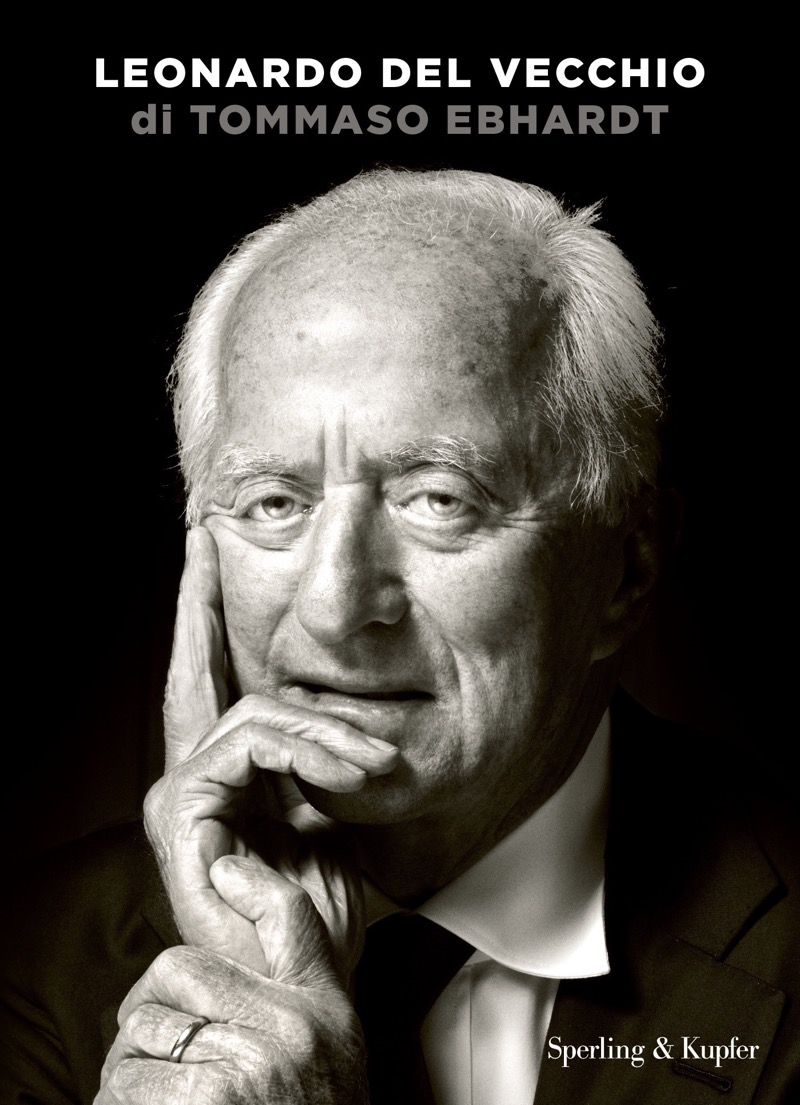
Leonardo Del Vecchio
Tommaso Ebhardt · 4 highlights
"There's only one office in the factory that is always empty, that of Leonardo. He's never at his desk. You can understand it even now, peering inside his ground floor room, that place is not lived in. It is tidy and clean, with old technological tools from the Eighties, a model of his first private airplane, a huge television turned off, a couple of framed photographs. It's clear at first glance that it's not a usual workplace. The office is not for him."
""I don't have my own office, I'm always in those of others, around the factory, and I talk directly with everyone, explaining why and how we do things this way. I go to my department heads and ask them as well: 'Why do we do it this way?' That way they learn and know how to pass it on.""
"In the morning there's no way to arrive before him. Often he's up when it's still dark. When he's alone, he goes around the departments, checking the workshop's machines."
"Leonardo is a trench man, a factory man. He always has a host of employees following him step by step, taking notes while he talks, invents, discusses with a department head, consults with a model maker, questions a planner."

Michelin: A Century of Secrets
Alain Jemain · 3 highlights
"“In practice, I conducted my questioning in the tone of friendly conversation by saying: ‘How are you going to do that? — Why can’t you do it differently? — Isn’t there another way?’” “I explained these questions to the worker, asking if he encountered any difficulties in the execution that I had not anticipated. “I noticed that even when I knew the issue quite well, this friendly conversation was extremely useful for gathering facts. “There are things that the man who handles the material for eight hours a day knows, while his boss, who is necessarily occupied with multiple issues, may be unaware of them.”"
"8° The permanent cultural revolution. It is the safeguard against vanity and superiority complexes. “The truth,” teaches Michelin, “is fluid and no one has a monopoly on it.” Or again: The truth in industrial matters always has a date. To have the sense of this relativity, one must live in tune with the facts, “facts that are always right and that are the arbiter of all discussions.” Golden rule: observe, measure, watch, inquire, listen by going into the field to meet those who have “first-hand knowledge” of reality. The facts invite constant questioning and constant modesty. “Anyone who can originate true progress has the right to be right against anyone.” Non-commissioned officers deserve to be listened to as much as marshals. A worker or engineer, a draftsman or an accountant can call the Boss directly. And the Boss himself goes into the field[35](private://read/01jkqdqdgs7t399cyecbezrhj0/#ftn_fn35)."
"“He is constantly on the go,” explains one of his executives. “He likes to go into the field, talk with the men who make the product or are in contact with the customers. Probably to maintain a permanent state of general mobilization, but more likely still to bypass the screens, know the problems directly as they arise.” François Michelin, the provincial, travels more than the average Parisian bosses."

St Hubert: 50 Years of Great Success
Beatrice Richard · 2 highlights
"A comforting element, the bosses work side by side with the staff, getting their hands dirty themselves, never shirking any task, even the humblest. Sharing the same work shifts inevitably creates strong bonds. Florent, for instance, quickly becomes fond of the Léger family and is inspired by their dedication. “If they can do it, I can do it too.” The esteem is mutual. His boss pushes him so much that after six months Florent is ready for a manager position. He’s not even twenty yet. No doubt this is one of René Léger’s strengths: knowing how to spot the talents that will help his business grow."
"It is also, for those who want it, the chance to quickly climb all the ranks. Pierre Paul is one of them. In a few months, the workings of the kitchen will hold no more secrets for him. After dishwashing, he will be assigned to bread, then to potatoes. Next, he will move to “the block” to prepare the plates, that is, to arrange the chicken, fries, coleslaw, and sauce. Then comes the job of “chicken breaker,” a delicate task that involves separating the breast from the thigh without wasting the meat. Finally, before becoming a manager, he will be a rotisseur, the highest achievement. By definition, it’s the master position at St-Hubert Bar-B-Q. For a long time, Mr. Léger took care of it personally. He also worked hard, from the very first day, to find the exquisite formula that now ensures St-Hubert’s reputation: meat that is well cooked but tender and juicy under a crispy skin. Now, the rotisseurs he has trained are taking over. Still, the boss keeps an eye on the poultry browning on the spit."

This Is Amancio Ortega, the Man Who Created ZARA
Covadonga O'Shea · 4 highlights
"assure you it was not planned. I spend my days moving from one part of the factory to another to see how everything is going. If I'm not in the warehouse, I'm in design. I'm interested in the whole process but… how I enjoy seeing what our artists produce! It's what I love most about this whole complex"."
"later. "You see it's true that I don't have an office—he told me Amancio in one of our conversations—. I've never had one. My work is not among papers, but in the whole factory." Indeed, that is how I met him, as I have told before, among hanging clothes circulating on the carousel of his distribution centre."
"Amancio is a man of habits. This is how he describes one of his preferences every day, for years: "My favourite route is to take a walk through the design area. I have always liked sitting among the most creative ones and listening to what they propose, most of them very young, who spend time travelling the world and seeing all trends in the media, not only in clothing but also in lifestyle. I learn a lot from listening to them and, if they ask for my opinion, I give it, but they are good professionals and know very well what they are doing.""
"the world, the owner of Inditex told me that he always clearly saw that customers should never be lost sight of. He had stood out in that shirt shop for his way of attending to those who came in. That serious and hardworking boy, always ready to lend a hand to whoever needed him, is the same character who today, at seventy-two years old, knows how to pay attention to those who require his opinion to solve a problem or address an important issue in the dizzying pace of international expansion that the company is moving at."