Scale Economics as Survival Doctrine
Books Teaching This Pattern
Evidence
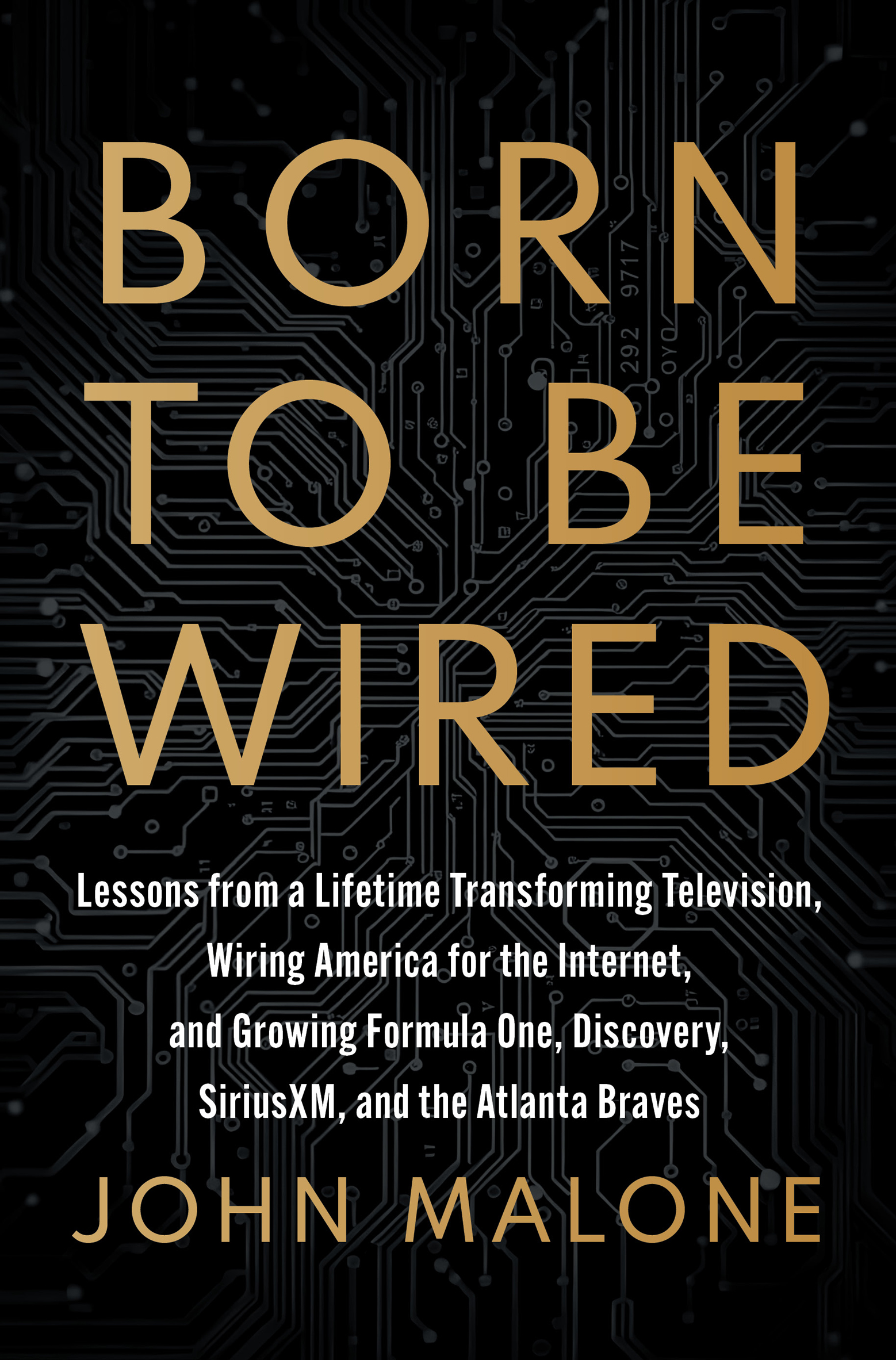
Born to Be Wired
John Malone · 4 highlights
"“We’ve got to get a lot bigger,” I told Bob and others the next morning in his office. We needed to get bigger because the bigger we were, the more cheaply we could buy everything: parts, debt, and programming. Economies of scale bring costs down. And if we didn’t get big fast, someone else would—scale economics was going to determine who was going to survive. “If you can buy ’em and finance ’em, I can drive synergies,” said JC, instantly reminding me why I was grateful he was with us. From that day forward, we made a goal of rapidly growing through acquisition and organic growth."
"By the late 1970s, we knew instinctively that the key to victory at TCI was in our ability to gain scale and grow ever larger through acquisition. We had three key goals in the 1980s: accumulate cable systems as fast as possible, aggregate them into contiguous clusters, and refinance the debt terms based on our bigger size and bigger cash flow."
"By 1982, TCI had built itself into the nation’s largest cable company, but the biggest deals were yet to come. More scale equals more savings, which gave us more buying power to buy more systems and build more scale, which equaled more savings—a virtuous growth cycle. When I wasn’t raising money in the 1980s, I was flying from city to city, making promises to politicians where we owned cable-TV franchises, or where we were trying to buy them. Big established media companies were now elbowing in to buy or build cable systems—not in the rural towns where the industry was born but in the big cities where urbanites were eager to explore the new national networks like HBO and TBS."
"By one tally, we had spent $3 billion by 1987 for more than 150 cable companies, giving TCI reach into nearly 20 percent of U.S. homes. We had a sufficient lead—nearly twice as large as the number two player, Time Inc.’s ATC. A year later, we had no earnings but posted cash flow of $850 million—more than the cash flow of ABC, CBS, and NBC combined."

How to Make a Few More Billion Dollars
Brad Jacobs · 3 highlights
"For one thing, we can use size to drive significant economies of scale, including lower procurement costs, better pricing, and streamlined logistics. This, in turn, improves productivity, accuracy, and operational efficiency. For example, a denser distribution network equates to faster deliveries and lower transportation expenses, as well as better customer service. If we can…"
"Scale also delivers higher cash generation, which we can invest in technology that’s too costly for smaller players. Cutting-edge enterprise systems, automation, and AI-based tools become exponentially more…"
"There’s one other thing related to scale that’s always on my radar when I research industries: making sure the industry fundamentals reward scale, meaning structurally, bigger must truly be better. In every industry I’ve chosen—energy, waste management, equipment rental, transportation and logistics,…"

This Is Amancio Ortega, the Man Who Created ZARA
Covadonga O'Shea · 4 highlights
""Growth is a mechanism of survival," Amancio once told me. And that conviction has been one of his driving forces."
"Growth is a mechanism of survival; if there is no growth, a company dies. A company has to be alive for the people who are committed to doing so."
""Ortega was eager to grow because he saw that the product was selling and, naturally, had an enormous, healthy, and logical ambition to succeed. He was not fond of endless meetings in which little was decided in the end. He knew he mastered the formula for success in the current time and did not hesitate to implement it at the rapid pace set by the market.""
"We have never been complacent, nor have we accepted easy success. Optimism can be very negative. You have to take risks! It was something I repeated tirelessly to all those who joined the company. And that meant following with determination what we had proposed."

With eyes on the path (translated)
Gustaf Douglas · 3 highlights
"An absolutely crucial success factor is that we as owners meet our companies in a common vision of change. It naturally involves organization, staffing, production, and market development. But my experience shows that the real danger lies in products that don't keep up. Therefore, product development and renewal through innovation and technical development are central to focusing the company's efforts. Product and organizational development is the only truly sustainable source of long-term growth. And when we achieve harmony in entrepreneurship, innovation, and culture, it usually turns out well."
"Facit's fundamental problem was that the development people and technicians worked in a closed world, stuck in their own proud history. Meanwhile, out there in the "world," an electronic revolution was underway, of which I now have an example in my office: the Japanese Sharp electronic calculator, no bigger than a large matchbox and the first to be sold in Sweden. It was Facit that imported it in a desperate attempt to latch onto the new trend. It was a shocking realization in my young life that a Swedish, world-leading corporation could be so quickly swept off the board by new technology. It left deep marks."
"Long-distance runners must pay more attention to culture, this vague concept so cherished in management literature. What it involves is shaping people's behavior in organizations towards constant product renewal, increased productivity, frugality, and a culture of continual improvements in humble work for customers. It is my experience that this pattern of behavior works best in flat organizations where responsibility is decentralized and as close to customers as possible. The smallest possible number of levels means that communication runs faster and becomes less distorted on the journey up and down the hierarchy."