System-in-Play Over Standalone Toys
Books Teaching This Pattern
Evidence
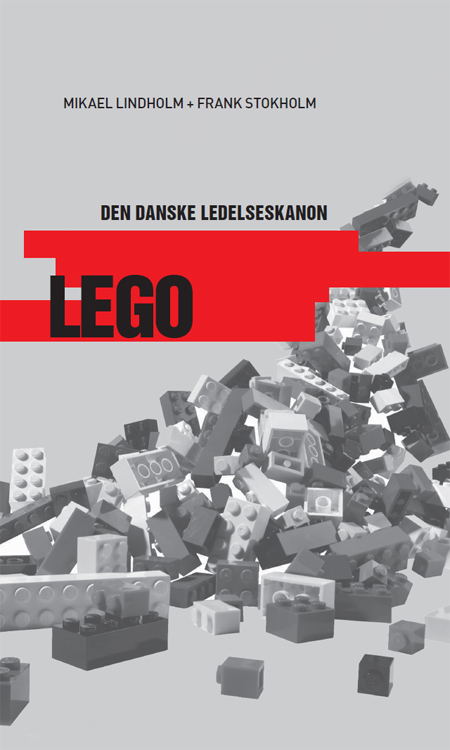
Lego - The Danish Management Canon, 3
Mikael R. Lindholm · 3 highlights
"After nearly a year with plenty of trials, they were ready with a new range of bricks, launched as the LEGO System in Play. 28 different boxes, 8 vehicles, and a number of other elements formed a complete set in the form of a city. As a framework for play, there was a plastic mat that could be spread out on the floor or table. Here, children could build houses, trees, traffic signs, and cars, and they could drive around following real traffic rules that came with it, coordinated with the Council for Greater Traffic Safety. The news was met with skepticism among many toy retailers. They did not believe in the idea. The largest toy retailer in the province, Holger Sørensen in Odense, said, “I don’t believe in that. The LEGO people have made a mistake. It will never amount to anything.”"
"The conversation made Godtfred think about the requirements the ideal toy for children worldwide should meet. In the following months, he formulated a series of “LEGO characteristics,” which he believed the company’s products should fulfill to have a future: 1. The toy must have a limited scope without restricting the free unfolding of the imagination. 2. It must be affordable in purchase price. 3. It must be simple and durable yet offer rich possibilities for variation. 4. It must be relevant for children of all ages and both genders. 5. It must be timeless, i.e., a classic among toys that does not need renewal. 6. It must be easy to distribute."
"In a way, the statement about the vast possibilities was completely correct. LEGO has calculated that two eight-stud LEGO bricks can be combined in 24 ways. Three bricks in over a thousand ways. And six bricks in over nine hundred million ways. The combinations are indeed, as Godtfred put it, endless. Only imagination sets the limits."