Algeria's Top-Down Industrialization Catastrophe
Implementation crushes theory — centralized strategies that ignore human motivation and rapid feedback loops produce demobilization, corruption, and collapse.
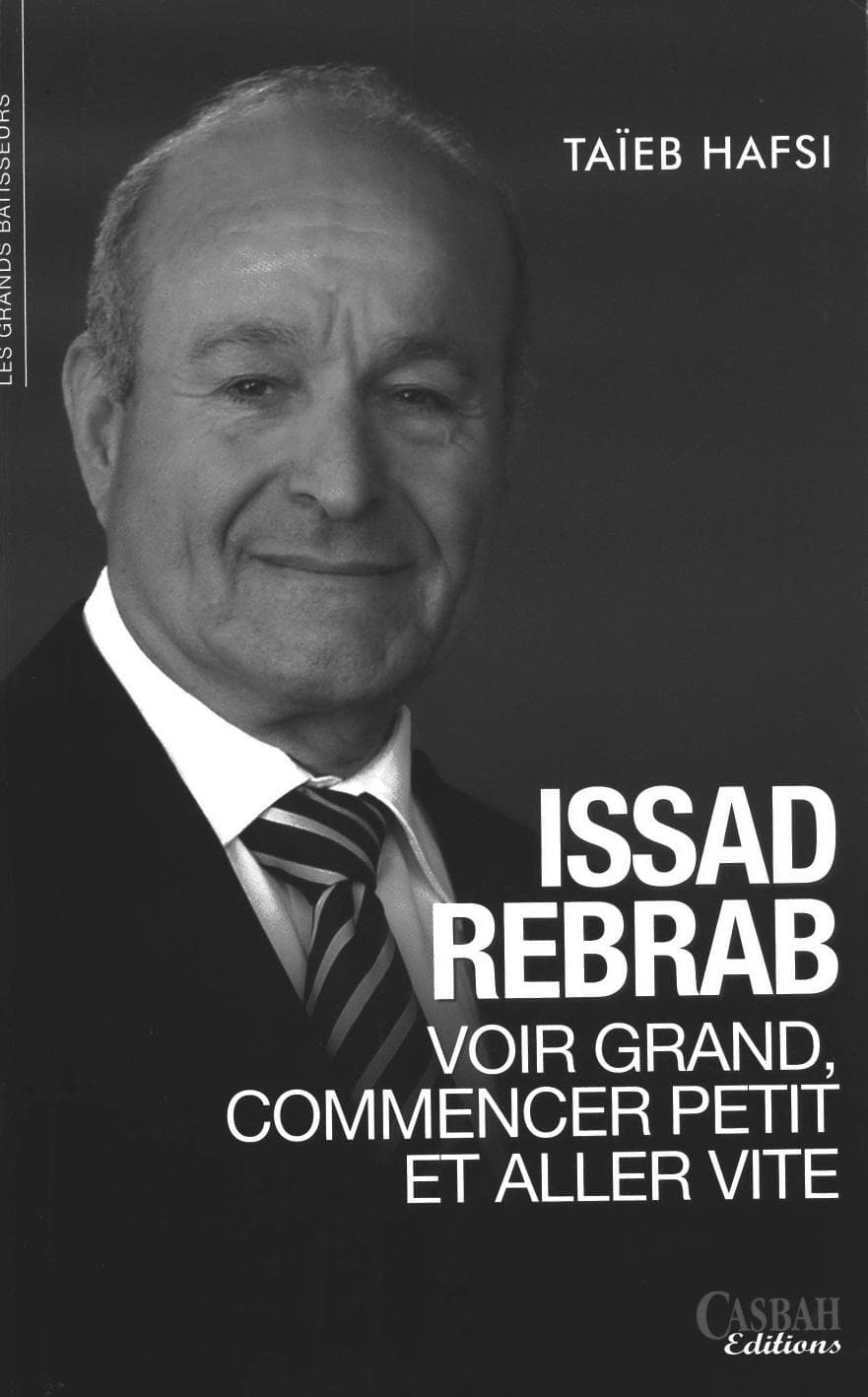
Voir Grand, Commencer Petit Et aller Vite
15 highlights · 11 themes · 1 cited people/companies
Issad Rebrab, Algerian industrialist and founder of Cevital Group, who built Algeria's largest private conglomerate by seizing opportunities in a post-socialist, oil-dependent economy.
Implementation crushes theory — centralized strategies that ignore human motivation and rapid feedback loops produce demobilization, corruption, and collapse.
“The day after independence, the redistribution of colonists’ lands occupied the minds of the leaders and elites. After the 1965 coup d’état, the industry was socialized under the guidance of Abdesselam and a group of French and Algerian theorists, inspired by the University of Grenoble economist, Stan de Bemis. The dominant philosophy was known as “industrializing industry.” Starting from the top, much like the Chin…”
“While building the organization, the entrepreneur continues to create. He constructs three important things: • 1. A business model that allows for a unique positioning in the market he defines, then • 2. Translates his business model into integrated activities that create value • 3. Sets up the system for value appropriation.”
“The market is an organizational instrument. It allows coordination without the need for a leader. That is why it is much more effective than socialist centralization. Of course, a market does not function on its own. Arbitration mechanisms are necessary to prevent the strongest from corrupting the system. But once the rules of the game are established and stable, players can be freed. In pursuit of their interests,…”
“The naivety of the theory of the socialization of the means of production comes from neglecting implementation. For people to converge and mobilize, they need attractive ideas, but these ideas must lead to convincing results relatively quickly. If the results are not there, a real disbanding occurs as everyone turns to their own interests and loses interest in the collective project. This is essentially what leads t…”
“Everything revolves around the perception of opportunity. This perception is first linked to the environment and then to the available resources. The environment is multifaceted and its perception is determined by the psychological profile of the person concerned. Two different people can have radically different opinions or perceptions of the environment. One may see it as favorable, while the other perceives it as…”
“The perception of an opportunity Perceiving an opportunity requires a careful look at what is happening in the environment, an ability to step back, and an unusual vision. The entrepreneur is a dreamer with feet on the ground. They imagine things that may seem impossible at the time of dreaming, but can become possible, provided they believe in them and work to achieve them. The entrepreneur’s art is to imagine solv…”
“The Algerian economy, after more than four decades of centralized public management, remains highly dependent on resources, particularly oil. Despite particularly fertile sources of opportunity, such as the availability of energy at a reduced price, the vast size of the territory, relatively good water resources, proximity to important markets, a rapidly developing domestic market, and a population accustomed to wor…”
“Thus, the theory of industrializing industry crashed not because it was bad, but because it faced the underestimation of implementation issues, particularly the multiplicity of objectives imposed on state enterprises and the increasingly frequent intervention of pressure groups supporting one objective or another. The resulting politicization discouraged managers, demobilized staff, and questioned the objective. The…”
“Happiness is close to misery; yes, happiness is close to misery (Qur’an)”
“Algeria, like Russia, is a very promising nation. It can succeed in everything. But its social base, its youth, the most precious of its resources, must remain enthusiastic and confident that it can build. Contributing to this motivates this collection.”
“According to modern economists, the entrepreneur is the most important source of activity and economic development. It can be estimated that the largest portion of job creation and, in the long term, wealth in a community comes from entrepreneurs. Thus, the entrepreneur is a creator of value. From placid and disarticulated elements, he makes combinations intended to seize the opportunities presented by his environme…”
“You can remove a general from his army but not a man from his will (Confucius, Analects, in China, Mazenod, 1970)”
Patrick McGee
Shares China, Chinese government, and Russia.
Thor Bjorgolfsson
Shares Chinese government and Russia.
Hidenori Itagaki
Shares China and Confucius.
Brad Jacobs
Shares China and Russia.
Ebbe Dommisse
Shares China and Russia.
Edited by Nikkei Business Publications
Shares China and Russia.
“Happiness is close to misery; yes, happiness is close to misery (Qur’an)”
“Algeria, like Russia, is a very promising nation. It can succeed in everything. But its social base, its youth, the most precious of its resources, must remain enthusiastic and confident that it can build. Contributing to this motivates this collection.”
“The Algerian economy, after more than four decades of centralized public management, remains highly dependent on resources, particularly oil. Despite particularly fertile sources of opportunity, such as the availability of energy at a reduced price, the vast size of the territory, relatively good water resources, proximity to important markets, a rapidly developing domestic market, and a population accustomed to working hard to survive, the development of the non-hydrocarbon economy remains below expectations.”
“According to modern economists, the entrepreneur is the most important source of activity and economic development. It can be estimated that the largest portion of job creation and, in the long term, wealth in a community comes from entrepreneurs. Thus, the entrepreneur is a creator of value. From placid and disarticulated elements, he makes combinations intended to seize the opportunities presented by his environment. Generally, entrepreneurship begins with the perception of an opportunity, continues with the building of an organization to seize it, and extends with the effective creation of value. These three elements are crucial for the development of the entrepreneurial character.”
“The perception of an opportunity Perceiving an opportunity requires a careful look at what is happening in the environment, an ability to step back, and an unusual vision. The entrepreneur is a dreamer with feet on the ground. They imagine things that may seem impossible at the time of dreaming, but can become possible, provided they believe in them and work to achieve them. The entrepreneur’s art is to imagine solving problems that will allow the dream to become a possible reality.”
“Everything revolves around the perception of opportunity. This perception is first linked to the environment and then to the available resources. The environment is multifaceted and its perception is determined by the psychological profile of the person concerned. Two different people can have radically different opinions or perceptions of the environment. One may see it as favorable, while the other perceives it as unfavorable. The environment can be broken down into three main components: institutions, competition, and the economy in general. Each of these can be a source of opportunities. Resources are also a source of opportunities, primarily because they allow one to believe that things are possible. Among the most frequently mentioned resources are financial resources and occasionally technological resources. Business development experience shows that even though these play a significant role, the most important resources are leadership, values, vision, and managerial capabilities. In the concept of leadership, the psychological foundation that induces self-confidence and the will to act is also included. The perception of an opportunity implies an understanding of the environment, the availability of appropriate managerial skills, and genuine self-confidence. Developing entrepreneurship requires work on these three aspects.”
“Everything revolves around the perception of opportunity. This perception is first linked to the environment and then to the available resources. The environment is multifaceted and its perception is determined by the psychological profile of the person concerned. Two different people can have radically different opinions or perceptions of the environment. One may see it as favorable, while the other perceives it as unfavorable. The environment can be broken down into three main components: institutions, competition, and the economy in general. Each of these can be a source of opportunities. Resources are also a source of opportunities, primarily because they allow one to believe that things are possible. Among the most frequently mentioned resources are financial resources and occasionally technological resources. Business development experience shows that even though these play a significant role, the most important resources are leadership, values, vision, and managerial capabilities. In the concept of leadership, the psychological foundation that induces self-confidence and the will to act is also included. The perception of an opportunity implies an understanding of the environment, the availability of appropriate managerial skills, and genuine self-confidence. Developing entrepreneurship requires work on these three aspects.”
“While building the organization, the entrepreneur continues to create. He constructs three important things: • 1. A business model that allows for a unique positioning in the market he defines, then • 2. Translates his business model into integrated activities that create value • 3. Sets up the system for value appropriation.”
“You can remove a general from his army but not a man from his will (Confucius, Analects, in China, Mazenod, 1970)”
“He governs best who governs least. (Lao-Tzu, Seuil, 1965)”
“The day after independence, the redistribution of colonists’ lands occupied the minds of the leaders and elites. After the 1965 coup d’état, the industry was socialized under the guidance of Abdesselam and a group of French and Algerian theorists, inspired by the University of Grenoble economist, Stan de Bemis. The dominant philosophy was known as “industrializing industry.” Starting from the top, much like the Chinese had done with the Great Leap Forward, it was necessary to develop basic industries which were supposed to elevate lighter industry.”
“The naivety of the theory of the socialization of the means of production comes from neglecting implementation. For people to converge and mobilize, they need attractive ideas, but these ideas must lead to convincing results relatively quickly. If the results are not there, a real disbanding occurs as everyone turns to their own interests and loses interest in the collective project. This is essentially what leads to corruption and the ensuing violence, as we have shown in a recent text11.”
“This appealing theory was also naive, and it remains so. It assumes that once the theory is developed, and thus the strategy formulated, implementation goes without saying. In fact, as with the Chinese Great Leap Forward and as the Soviets also experienced, implementation is the crux of the matter. Human beings are capable of idealistic mobilization, but only when the outcome is not in doubt or when they have no choice. That was the case with the national liberation struggle. When results are lacking, they discredit the strategy, and demobilization of people follows. This accelerates the movement toward defeat, regardless of the strength of the leaders and the political parties that support them. Mao Zedong was a powerful man, and his party controlled all of China. This did not prevent the catastrophes now revealed by the Chinese government. The Great Leap Forward caused famines that resulted in the deaths of more than 30 million Chinese. The Cultural Revolution was even worse for China’s economic development capacity.”
“Thus, the theory of industrializing industry crashed not because it was bad, but because it faced the underestimation of implementation issues, particularly the multiplicity of objectives imposed on state enterprises and the increasingly frequent intervention of pressure groups supporting one objective or another. The resulting politicization discouraged managers, demobilized staff, and questioned the objective. The goodwill of everyone, from the minister to the last employee, is not in question. It’s the system that was too complex and therefore could not be reasonably managed centrally. It is telling that B. Abdesselam, in his latest book, criticizes practically everyone; civil servants, private entrepreneurs, politicians, no one finds favor in his eyes, because he naively believes that wanting is enough to achieve. This great patriot is thus defeated by his own beliefs that he cannot confront with reality.”
“The market is an organizational instrument. It allows coordination without the need for a leader. That is why it is much more effective than socialist centralization. Of course, a market does not function on its own. Arbitration mechanisms are necessary to prevent the strongest from corrupting the system. But once the rules of the game are established and stable, players can be freed. In pursuit of their interests, they will achieve what no organization can and enable the accumulation of wealth that drives development. This accumulation of wealth can generate tensions, especially in new countries, but the State remains the master of the game and, through taxation and laws, sometimes through direct allocation of resources, it can therefore reduce negative effects and achieve a redistribution that maintains the balance of society.”