Early Volume Obsession Over Excellence
Manufacturing challenges and pursuing maximum covers created logjams and compromised the ability to deliver true excellence.
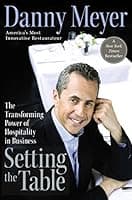
New York restaurateur who built a hospitality empire starting with Union Square Cafe and pioneered "enlightened hospitality" philosophy.
Manufacturing challenges and pursuing maximum covers created logjams and compromised the ability to deliver true excellence.
Trying to extend a brand before establishing the core brand is a fundamental mistake.
“In order to do a gut check on how much I really want to take a space or do a deal, I always ask myself whether I would do this deal if it were given to me for free. That sounds simplistic, I know, but it works. Believe it or not, my answer to this question is most often “no.””
“the worst mistake is not to figure out some way to end up in a better place after having made a mistake. We call that “writing a great last chapter.” Whatever mistake happened, happened. And the person on the receiving end will naturally want to tell anyone who’s interested all about it. That’s to be expected. While we can’t erase what happened, we do have the power to write one last episode so that at least the sto…”
“THE FIVE A’S FOR EFFECTIVELY ADDRESSING MISTAKES Awareness—Many mistakes go unaddressed because no one is even aware they have happened. If you’re not aware, you’re nowhere. Acknowledgement—“Our server had an accident, and we are going to prepare a new plate for you as quickly as possible.” Apology—“I am so sorry this happened to you.” Alibis are not one of the Five A’s. It is not appropriate or useful to make excus…”
“Trailing is a combination of training and auditioning; it’s rigorous and sometimes awkward. We generally keep people on probation until we’ve first observed their behavior within the real environment of the dining room or kitchen, and until we’ve assessed their overall fit with our team. We’re upfront about this process, and we tell candidates that we also expect them to audition us as prospective employers. We urge…”
“We aim to hire people who possess an emotional skill that chef Michael Romano calls the excellence reflex. People duck as a natural reflex when something is hurled at them. Similarly, the excellence reflex is a natural reaction to fix something that isn’t right, or to improve something that could be better. The excellence reflex is rooted in instinct and upbringing, and then constantly honed through awareness, carin…”
“2. Self-Awareness When I scan their resumés, I often tell management candidates that their career story is like an autobiography they have been writing for many years: “You’ve made a lot of interesting choices. I’m very curious about why a job with us strikes you as the logical next ‘chapter’ in the book of your life.” I also want to know why they feel they have finished the most recent chapter: “Why does this parti…”
“Context, context, context! For years I had heard the business mantra, “Location, location, location”—an ironclad principle that the key to the success for any retail establishment was picking the right address to set up shop. My own experience indicates that a far more significant contributor to success is context. A powerful example is Tiffany’s famous blue box. The box is the context that provides a strong indicat…”
“Constant, gentle pressure is my preferred technique for leadership, guidance, and coaching. It’s the job of any business owner to be very clear as to the company’s nonnegotiable core values. They’re the riverbanks that help guide us as we refine and improve on performance and excellence. A lack of riverbanks creates estuaries and cloudy waters that are confusing to navigate. I want a crystal-clear, swiftly flowing s…”
“At this moment, “enlightened hospitality” was born. In a meeting of the entire staff of Gramercy Tavern, and with full agreement and support from Tom, I began to outline what I considered nonnegotiable about how we did business. Nothing would ever matter more to me than how we expressed hospitality to one another. (Who ever wrote the rule that the customer is always first?) And then, in descending order, our next co…”
“I feel the entrepreneurial spark when some instinct tells me that a certain dining “context” doesn’t currently exist but should exist. I then ask myself a series of questions that force me to examine and challenge the status quo—and then change it. Each question begins with these five words: “Who ever wrote the rule…?” Who ever wrote the rule, for example, that you shouldn’t be able to enjoy a refined dining experie…”
“In every business, there are employees who are the first point of contact with the customers (attendants at airport gates, receptionists at doctors’ offices, bank tellers, executive assistants). Those people can come across either as agents or as gatekeepers. An agent makes things happen for others. A gatekeeper sets up barriers to keep people out. We’re looking for agents, and our staff members are responsible for…”
“It is my firm conviction that an executive or business owner should pack a team with 51 percenters, because training them in the technical aspects will then come far more easily. Hiring 51 percenters today will save training time and dollars tomorrow. And they are commonly the best recruiters for others with strong emotional skills. Nice people love the idea of working with other nice people.”
John Malone
Shares Paul, Miami, and father.
Barry Diller
Shares father and mother.
Alain Jemain
Shares Europe and Anderson.
O. Casey Corr
Shares father and mother.
Grant Baker
Shares Paul.
Sir Jim Ratcliffe, Dominic O'Connell, Quentin Willson, Patrick Barclay
Shares Europe.
“My craving for the adventures of travel, food, and wine is what first compelled me to do what I do. In fact, like so many other entrepreneurs I’ve met, I’m not even sure I had much of a choice: a career in the restaurant business was going to tap me on the shoulder even if I hadn’t found it first.”
“Since the beginning, people have told me that in going into the restaurant business, I chose one of the hardest businesses in the world. True, a restaurant has all kinds of moving parts that make it particularly challenging. In order to succeed, you need to apply—simultaneously—exceptional skills in selecting real estate, negotiating, hiring, training, motivating, purchasing, budgeting, designing, manufacturing, cooking, tasting, pricing, selling, servicing, marketing, and hosting.”
“I send my managers an unequivocal message: I’m going to be extremely specific as to where every component on that tabletop belongs. I anticipate that outside forces, including you, will always conspire to change the table setting. Every time that happens, I’m going to move everything right back to the way it should be. And so should you! That’s the constant aspect. I’ll never recenter the saltshaker in a way that denies you your dignity. That’s the gentle aspect. But standards are standards, and I’m constantly watching every table and pushing back on every saltshaker that’s moved, because excellent performance is paramount. That’s the pressure.”
“I have always believed that you can tell as much about a company by the deals it does not make as by those it does.”
“I rely on our senior vice president for people, Paul Bolles-Beaven, to tell me if we have the requisite depth of human capacity and essential…”
“Finally, I ask our managers to weigh one other critical factor as they handicap the prospect. Do they believe the candidate has the capacity to become one of the top three performers on our team in his or her job category?”
“Clear, timely communication is the key to applying constant, gentle pressure. To illustrate the point, I teach our managers about the “lily pad” theory.”
“In fact, I too felt free. I was, for the first time in my career of opening restaurants, feeling relaxed. This project was so huge and so far beyond any fantasies I may have had about actually being in control that it forced me let go.”
“I always caution against complacency. I instruct our managers to recruit new staff “blood” as if we’re behind. In fact, we’ll even create a job that wouldn’t otherwise exist when we meet someone we just know belongs on our team.”
“Hospitality cannot flow from a monologue. I instruct my staff members to figure out whatever it takes to make the guests feel and understand that we are in their corner. I don’t tell the staff precisely what to do or say in every scenario, though I do have some pet peeves that I don’t ever want to hear in our dining rooms. I cringe when a waiter asks, “How is everything?” That’s an empty question that will get an empty response. Also, I can’t stand the use of we to mean you, as in, “How are we doing so far?” I abhor the question, “Are you still working on the lamb?” If the guest has been working on the lamb, it probably wasn’t very tender or very good in the first place.”
“I’ve learned that an effective way to achieve all those goals with a new chef (and to get to know the essence of the person) is to return with him to his roots. It was a moving experience to travel with Gabriel in Alsace and to see his homeland through his eyes and his palate. Of course the region holds special meaning for me too; my parents had lived in the neighboring Lorraine for the first two years of their marriage. Alsace-Lorraine has historically been a melting pot, with French, German, Protestant, Catholic, and Jewish cultures living together through war and hardship, producing a resilient people and excellent, soul-satisfying food.”
“I realize that I don’t have to do this kind of thing, but there is simply no point for me—or anyone on my staff—to work hard every day for the purpose of offering guests an average experience. I want to hear: “We love your restaurant, we adore the food, but your people are what we treasure most about being here.” That’s the reaction that makes me most proud and tells me we’re succeeding on all levels. I encourage each manager to take ten minutes a day to make three gestures that exceed expectations and take a special interest in our guests. That translates into 1,000 such gestures every year, multiplied by over 100 outstanding managers throughout our restaurants. For any business owner, that can add up to a lot of repeat business.”
“Indeed, business is problem solving. As human beings, we are all fallible. You’ve got to welcome the inevitability of mistakes if you want to succeed in the restaurant business—or in any business. It’s critical for us to accept and embrace our ongoing mistakes as opportunities to learn, grow, and profit. Baseball’s top hitters can make seven mistakes out of every ten at-bats, and still ride a .300 lifetime batting average into the Hall of Fame.”
“the worst mistake is not to figure out some way to end up in a better place after having made a mistake. We call that “writing a great last chapter.” Whatever mistake happened, happened. And the person on the receiving end will naturally want to tell anyone who’s interested all about it. That’s to be expected. While we can’t erase what happened, we do have the power to write one last episode so that at least the story ends the way we want. If we write a great one, we will earn a comeback victory with the guest. Also, the guest will have no choice but to focus on how well we responded to the mistake when telling anyone we made it. We can, then, turn a mistake into something positive. To be effective, the last chapter must be written imaginatively, graciously, generously, and sincerely. And sometimes we even write a great last chapter when it was the guest, not us, who made the mistake. If someone spills his or her glass at the bar, we pour another round, period. A child once spilled a glass of Sprite at his table, so we bought all six members of his family a round of what they were drinking. If a guest doesn’t like his or her dish, it is to be removed from the bill.”
“Automobile companies and watchmakers have long understood that people buy their products not just because of how the product itself performs, but to tell a story about themselves.”
“Business, like life, is all about how you make people feel. It’s that simple, and it’s that hard.”
“This was once a radical concept in my business, where excellent cuisine was almost always paired with stiff arm’s-length service. Sometimes, we’ve moved in the other direction, beginning with the casual atmosphere of a barbecue joint or a shakes-and-burgers stand, and then attempting to exceed expectations by employing a caring staff and using the finest ingredients. Our formula is a lot tougher to achieve than it sounds, but it can be applied successfully to virtually any business you can name.”
“I had a simple formula: I knew I would be spending many, many hours working in the restaurant business, so I’d need to surround myself with employees who were fun, smart, and interested in learning, not to mention dedicated to excellence and eager to play on a winning team.”
“Managers can use their fire as a torch: a light for guidance and teaching, and for leading and showing the way. They can use their fire to offer warmth and empathy, to make employees feel safe. A manager’s fire can be used as a campfire, to form collegial bonds with employees, and to inspire others and help them grow. A fire can also be a bonfire to rally the troops, to foster team folklore, to get the group motivated, and to bring people together in a unified pursuit of a common goal. Managers who inspire high levels of performance in their employees know how to produce magical results that leave people in awe. Managers must be wizards—the way they “breathe fire” is a source of motivation that impels employees to imitate them, and to grow. And managers must learn to use the fire in their own bellies as a way to fuel and refuel their own ongoing passion for this business. If leaders lack fire, why would anyone want to follow them?”
“First, any new restaurant would have to be as excellent within its niche as Union Square Cafe. (In my mind, the success of Union Square Cafe had been a fluke, and I was fairly certain I’d never have a hit like that again.) Second, the opening of the new restaurant could in no way compromise or diminish the excellence of Union Square Cafe. (Restaurant sequels can diminish the original, perhaps because the management’s focus and capacity may be spread too thin.) Third, I would open another restaurant only when I was sure that I would also achieve more time for myself and Audrey. (That seemed unlikely, as I was already working up to fourteen hours a day.) At this point in our lives, Audrey and I were”
“In every business, there are employees who are the first point of contact with the customers (attendants at airport gates, receptionists at doctors’ offices, bank tellers, executive assistants). Those people can come across either as agents or as gatekeepers. An agent makes things happen for others. A gatekeeper sets up barriers to keep people out. We’re looking for agents, and our staff members are responsible for monitoring their own performance: In that transaction, did I present myself as an agent or a gatekeeper? In the world of hospitality, there’s rarely anything in between.”
“Sparks, The Palm, Peter Luger, Smith and Wollensky,”
“When you are seated at the precise time of your reservation at the exact table and with the waiter you requested, that is a reflection of good service. When the right food is delivered to the right person at the right table at the right temperature at the right time—that’s service. When you see a member of the waitstaff decanting a bottle of wine with care and grace, that’s service. When your empty plate is cleared from the table in a graceful manner, that too is service. When, in answer to your question, the waiter can explain the nuances of the wines on our list, that’s service.”
“We call that “skunking.” A skunk may spray a predator when it feels threatened, but everyone else within two miles has to smell the spray, and these others may assume that the skunk actually had it in for them. It’s not productive to work with a skunk, and it’s not enjoyable to be served by one either. In a business that depends on the harmony of an ensemble, a skunk’s scent is toxic.”
“once again, the timing wasn’t right for us. With a year to go before opening at MoMA, we were entirely focused on that project and lacked the additional organizational capacity we’d need to succeed at this new opportunity. But by exploring it, we did realize that the time might come someday for us to venture into the airport food business. The risk in saying “not yet” is that an opportunity could be taken by some other, more prepared company.”
““There is to make them feel important. Always start with the one who most need feel important!””
“I will throw myself into a new venture only when certain criteria are met: I am passionate about the subject matter (i.e., early American folk antiques, modern art, jazz, barbecue). I know I will derive some combination of challenge, satisfaction, and pleasure from the venture. It presents meaningful opportunities for professional growth for my colleagues and me. The new business will add something to the dialogue in a specific context, such as luxury dining (Gramercy Tavern), museum dining (The Modern, Cafe 2, and Terrace 5 at the Museum of Modern Art), Indian dining (Tabla), barbecue (Blue Smoke), or burgers and frozen custard (Shake Shack). Financial projections indicate the possibility of sufficient profit and returns on our investment to warrant the risk we’re undertaking.”
“I actively seek and benefit from my partners’ input, a process that often generates some healthy tension among us. The conversation is always candid, passionate, and constructive. I carefully weigh all of their views as well as my own gut as I study our options. Making a unilateral decision to grow is not my style, and I believe that such a decision won’t lead to optimum success down the road. Being in agreement is…”
“I have continued to view people who work for me as volunteers. It isn’t that they’ve agreed to work without pay. “I’m aware that you’re all here, on the most basic level, to pay the rent,” I tell new hires. “Just as you need a job, I need people to take orders accurately, and to cook wonderful food.” Then I remind them that if they’re as talented at what they do as we believe they are, they could have gotten a job at any of 200 other very good restaurants for the same pay. “You could all be doing what you do anywhere else,” I say. “But you chose to be with us. You have volunteered to be on our team, and we owe it to you to provide you with much more than just a paycheck in return. We want you to feel certain you have made a wise choice in joining our company.””
“Theoretically, if the ideal candidate were to score 100 on a suitability test (something we have never administered), his or her potential for technical excellence would count for 49 percent, and innate emotional skills for hospitality would count for 51 percent.”
“When we look for intelligence, we’re thinking about open-minded people with a keen curiosity to learn. Do they ask me questions during interviews? Do they display a broad knowledge about a lot of subjects, or a deep knowledge about any one subject? A hallmark of our business model is to continually be improving. I need to stock our team with people who naturally crave learning and who want to evolve—people who figure out how each new day can bring rich opportunities to do something even better.…”
“there was no need to go forward. Where would it lead? Which of our staff members would find this a satisfying move in their careers? Where was our passion for operating a church café?”
““We have fun taking service seriously,” he said. “And as for perfection, we just hide our mistakes better than anyone else!””
“Shared ownership develops when guests talk about a restaurant as if it’s theirs. They can’t wait to share it with friends, and what they’re really sharing, beyond the culinary experience, is the experience of feeling important and loved. That sense of affiliation builds trust and a sense of being accepted and appreciated, invariably leading to repeat business, a necessity for any company’s long-term survival.”
“These meetings give me a balanced input on decisions I’ll need to make about our company, with the point of view of just about all of our…”
“We spent our time driving through farmland, strolling around small towns and villages, and studying dozens of menus—their shape, size, categories, formats, and even font styles. We talked about what kind of uniforms we’d want our staff to wear. We checked out pottery and furniture shops and discussed décor. We visited dozens of pastry, cheese, and butcher shops. It was easy to see how Gabriel’s very personal style of cooking had been nurtured in and around the farmhouses of his extended family. He told me, for instance, all about the classic Alsatian baeckoffe, a pork, veal, or beef stew made by marinating the meat in local white wines (Riesling, Edelzwicker, and Sylvaner), and then baking it with layers of potatoes (sliced an eighth of an inch thin), carrots, leeks, onions, parsley, pepper, and tomatoes on top.”
“My ultimate mission for any new restaurant is always to begin with a subject I love, zero in on what I enjoy most about it, and then envision a new context for it.”
“Château Rayas, Vouvray’s Domaine Huet, Burgundy’s Marc Colin and Robert Arnoux, Château Simone in Provence, Tuscany’s Querciabella and Grattamacco, Piedmont’s Bricco Manzoni,”
“Timing is everything. There is an important art not only to determining whether one should or should not go into a deal, but to knowing whether one might want to go into such a deal somewhere down the road. Especially in cases where timing was the decisive factor in not making a deal, there is value in remaining in close contact with the potential future partner. While it’s true that today’s potential business deal may later evaporate, it also may one day evolve into something bigger, better, and more richly textured. Patience has its rewards.”
“I was confident that I could find someone else who would be eager to pay my below-market rent on the remaining years of my lease. I sensed a lot of upside and felt protected against the downside.”