“Storeulv's eyes were fixed on a new prey; this time one of Sweden's largest shipping companies. He now intended not to let a larger predator take the prey right from under his nose. Slowly he circled towards the Stockholm shipping company, which was run by the once so powerful Salen shipping family. Previously, the company was known as Uddevalla Shipping, originally started to take care of the ships left by the Sale…”
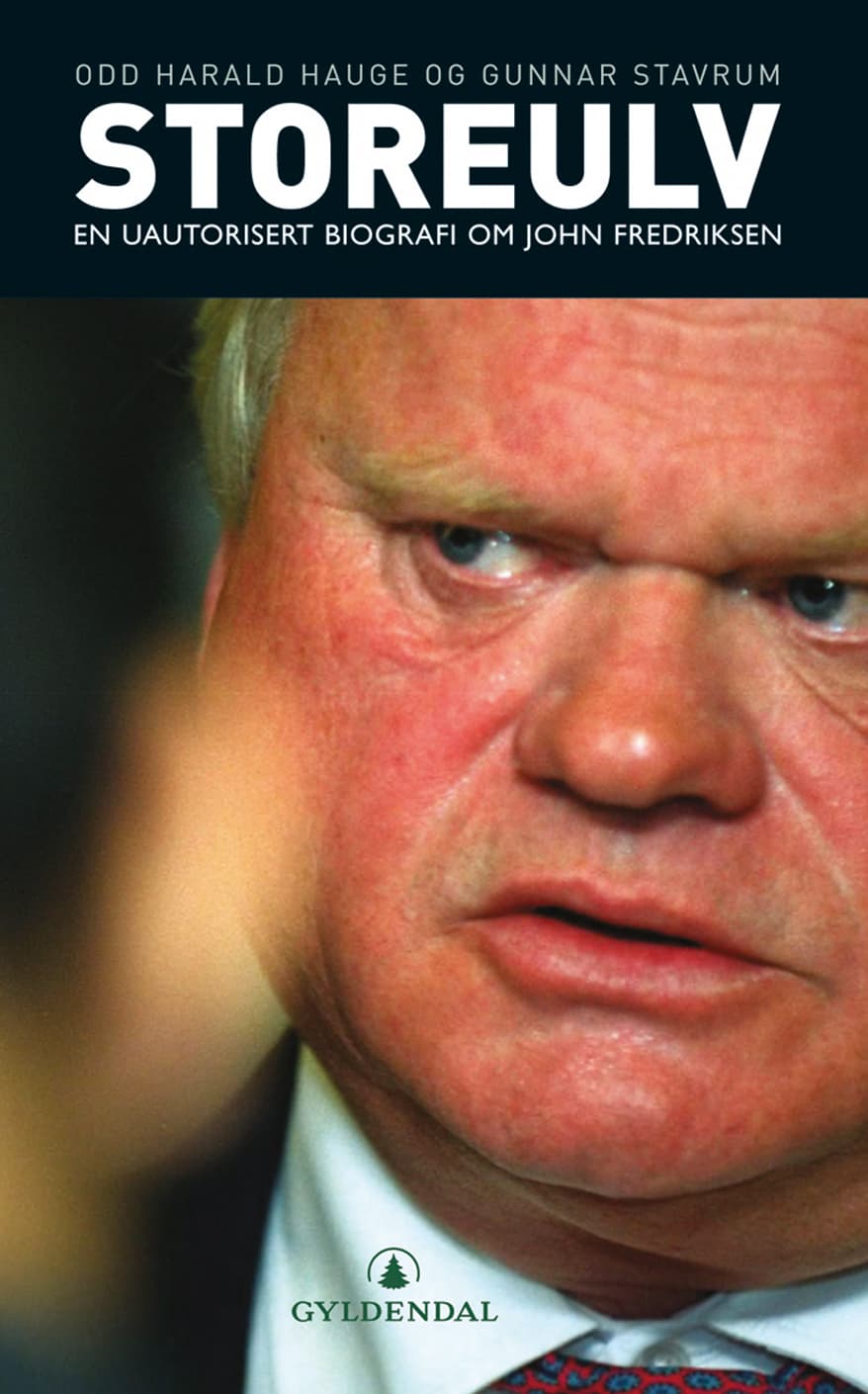
Storeulv (translated)
Odd Harald Hauge
169 highlights · 16 themes · 288 people/companies
Norwegian shipping tycoon who built the world's largest tanker fleet and a vast fortune through bold dealmaking and relentless asset plays.
Era
1970s–2000s: volatile global shipping markets, oil shocks, deregulation, and multiple financial crises.
Scale
Controlled multi-billion-dollar shipping empires including Frontline and SeaDrill, at one time holding over $4B in assets and influencing global tanker and offshore markets.
Ask this book
169 highlights
Suggested questions
Notes
“In the winter of 2000, a new opportunity arose to acquire a shipping company in serious trouble, the Canadian company misleadingly named Golden Ocean. It had sailed from a golden sea to a sea of defaulted loans, and on January 14, 2000, they threw in the towel and asked the United States bankruptcy court in Delaware for protection from creditors. Thus, the wrecked shipping company was given 135 days to sort out its…”
“The old feuds with former drinking buddies and friends were history, a new court was in place. At the forefront was none other than Little Wolf, Tor Olav Trøim, who was never far away. Just as loyal, and apparently always in the shipowner's favor, was Nordea's Calle Steen, the man who had conjured up a loan of one and a half billion during the banking crisis ten years earlier. Among brokers, many would like to be in…”
“John Fredriksen rarely thinks long-term. Buy today, sell tomorrow, take the profit when it’s there. These years leading up to the 90s were perfect for such a mindset. With the best broker contacts and a knack for good deals, Fredriksen made millions of dollars each time a ship was bought and sold. He himself claimed to have earned 100 million dollars each year from such quick transactions during the period 1987–89.…”
“John Fredriksen bought his first Frontline shares in the open market and paid with money. No one can criticize that. But the operations that followed had all the hallmarks of being a business within a business: Through Frontline, the shipowner had a golden opportunity to sell ships to himself and let others pay for it. Sven H. Salen had barely left the door before John Fredriksen made his first gigantic deal with hi…”
“Combined with the shipping contracts with the shipowners, Fredriksen often managed to get the right (option) to purchase some of the ships at a fixed agreed price. When freight revenues increased dramatically, the values of the ships also increased far above the option price. Fredriksen exercised his right to purchase and immediately resold the ships at a large profit. The right to purchase, and thus the profit, bel…”
“The United Kingdom is a very tax-friendly place to live if one only has wealth and does not conduct business in the country. All income and gains one has in other countries are tax-free as long as the money is not brought into the United Kingdom. This applies to foreign nationals living in the United Kingdom who do not intend to stay there forever. This odd and very flexible rule has made London a very attractive pl…”
“Anyone who after this could think of becoming a shipowner, can console themselves with the fact that it is easier than becoming a nuclear scientist. Perhaps it is easier than running a kiosk as well. Money is necessary to have, but not so much. Knowing something about financing is important, probably the most important. After a crash course in financing, one could try with a mix of ordinary mortgage debt, convertibl…”
“Shipbrokering is about information, and few managed to gather and remember as many details as Fredriksen. The many small pieces are what make the difference sooner or later when competing with a host of other brokers for a deal. Moreover, John Fredriksen had flair; he smelled money and opportunities.”
“f one is to explain John Fredriksen's success, one of the keys is the incredible ability the man has to shake off defeats and push on relentlessly. He himself believes he lost a billion kroner during the "liquidation sale" associated with the custody detainment in 1986. He slowly worked his way up again in Cyprus, only to face another debacle with the feverish contracting of tankers from South Korea in the early 90s…”
“For Frontline shareholders, the adventure continued. Even though the share price tripled through 2003, it rose a further 50 percent in the first quarter of 2004 when dividends are included. Those who thought the party was over then were wrong once more. The freight market was exceptionally strong throughout the winter, so the Frontline board could announce yet another record dividend for the first quarter, totaling…”
“In the fight to find buyers in an impossible market, little remained untried. The brokerage firm Clarkson in London came up with an apparently unlikely buyer. The world's richest man, the Sultan of Brunei – the oil-rich small state on the island of Borneo – was willing to buy three supertankers for 80 million dollars each. The contact was between the brokerage firm and the Sultan's dispatched worker in London. The S…”
Themes
Outsider-to-Kingpin Control LoopsWinning Through Distressed TakeoversCourt of Brokers and Right HandsAsset Cycling to Capture VolatilityNo-Sentiment Steel DisposalOption-Loaded Contract StructuresTax Residency as Strategic MoatMicro-Managed Outsourced OperationsBuy Control, Outsource OperationsInformation Edge from Broker WebNo Sentiment for Old SteelShareholder Cash-Flow RelentlessnessDeal-First, Fix-Later MentalityDeal With Myself for Maximum LeverageFlags and Structures as ShieldsRisk Appetite As Primary Weapon
People
Companies
Highlights
“Morten Kristiansen was the first to call everyone's attention. "You Dan," he said with a penetrating voice, "you might wonder why we are gathered here today. It's to check your dick. We only do business with men who have hair on their dicks."”
“"Let's get to the point. The Fredriksen group has eight modern chemical ships that we understand are for sale. It has not been possible to agree on a price throughout the autumn, and Morten Mo here," he nodded towards the end of the table, "has taken this initiative to bring us together and agree."”
“"Is it time to discuss price?" Fredriksen's eyes became even narrower and more calculating. It seemed as if the alcohol had evaporated in seconds. "240 million dollars. That's my final price demand. I'm not playing shop." "They're not worth a penny more than 170 million," Dan Odfjell replied. "That would suggest we land on 200 million," Morten Mo mediated.”
“The Fredriksen group committed to selling the eight chemical tankers "Fort Puma," "Fort Lion," "Fort Wolf," "Fort Leopard," "Fort Cheetah," "Northern Panten," "Northern Falcon," and "Northern Eagle," seven of them 40,000 tons, built in 1986 or 1988 and registered in Cyprus, to Odfjell's publicly listed company Storli for 205 million dollars. This gave the Fredriksen group a profit of 500 million kroner.”
“The seven middle-aged gentlemen stumbled up the stairs to Barock on Universitetsgaten, where one of Fredriksen's regular tables was cleared. The court of young brokers and freeloaders quickly descended upon the place. Fredriksen waved away the maître d' and ordered two nine-liter bottles of Veuve Cliquot champagne. He was bubbling, also with delight.”
“After two failed attempts to pour from the nine-liter bottles with one hand, the great test of manhood among those who can afford such things, things completely overflowed for Fredriksen. He dashed onto the floor and cleared space with flailing arms. There he stood, legs apart, looking like a highwayman disguised in a silk suit, while the spotlights relentlessly exposed his blood alcohol level. He shouted so loudly that it echoed in the disco. – Peasants! Today, I've made the best deal of my life. Half a billion! I've damn made half a billion!”
“MADAME DOLLY A hot, southern breeze from the Singapore Strait wended its way through the lush garden, past the palms that partially replaced the outer wall, and set the ceiling fans in lethargic motion in the bar at Raffles Hotel. It provided a slight, albeit welcome, draft for the few guests who were scattered around in the old-fashioned, worn Manila furniture.”
“John Fredriksen was waiting for one of his drinking buddies, the fourteen years older Jan Petter Røed. The night before, they had been up until four o'clock, in the dark streets of the area around Bugis Street, the haven for transvestites. Fredriksen smiled at the thought of this, Singapore's biggest tourist attraction. There were many greenhorns who got a surprise there. He signaled to the Indian at the bar to get another gin and tonic. The hangover was starting to let go, even though the heat clung both suit and shirt to his back.”
“Singapore was an incredible place, an amazing mix of the East’s mystique and chaos, and an emerging financial center with great business opportunities.”
“The shy and reserved John Fredriksen made such a favorable impression on the suited gentlemen at Blehr & Tenvig that he outcompeted his fellow applicants from the upper west side. The starting salary was 600 kroner per month. John Fredriksen did not know it as he sat on the tram from Helsfyr on January 2, 1961, on his way to his first day of work, but he had actually started at "shipbroking school." This was the way most shipbrokers had begun their career. The environment was little academic, and it suited him perfectly.”
“Shipbrokering is about information, and few managed to gather and remember as many details as Fredriksen. The many small pieces are what make the difference sooner or later when competing with a host of other brokers for a deal. Moreover, John Fredriksen had flair; he smelled money and opportunities.”
“Røed gestured with his hands. "I agree, but don't try to teach the Chinese how to do business. It looks random, but everything indicates that it is going well. They have many connections we can't even imagine. But forget it. Dolly had an interesting proposal today. She knows that I dream of starting on my own with a ship, and she offered to help with the financing. You know, she has a liking for me for some reason."”
“Even more crucial for the commission income was their compatriot Jan Petter Røed. Madame Dolly Seah in Singapore was serious when she offered Røed to finance his start as a shipowner. In the fall of 1969, Fredriksen found an old dry cargo barge of 7000 tons, built at the not too reputable Doxford shipyard, which Røed got for 600,000 dollars. The money came from Dolly, the ship was named "Cherry Weekend," and Røed was underway.”
“The meeting place for Arab businessmen in the early '70s was "The Paris of the Middle East," Beirut. The Lebanese trading traditions were an important factor, as was Beirut's role as the financial center of the region. All major banks had an office in the capital of Lebanon. But just as important were Beirut's beaches, the modern hotels, and the bustling nightlife. It acted like a magnet on men from the still orthodox and almost dry countries like Egypt, Saudi Arabia, Syria, and partly Turkey.”
“Jan Petter Røed”
“Ali El-din Al-Bahri”
“the defense from his friends at the Theatercafé was brief and to the point: – Someone has to eat the tall steaks and drive the low cars.”
“He quickly mastered shipping's oldest trick: namely, to get the recipient to pay for the phone calls, and to end telex transmissions without "answer back," thereby sneaking away from payment.”
“With Northern Shipping, the first building blocks were put in place in an international shipping empire. Liberia was the cornerstone. The West African country rightly bore its name. In terms of shipping, it was clearly about freedom. There was no Brønnøysund Register where one had to submit accounts, and no owners were mentioned in the papers of Liberia’s trade register. But Liberia is not a banana republic in all areas. The USA's most skilled lawyers have designed the country’s maritime laws, which are almost identical to the American ones. Shipowners risked no legal surprises by sailing under the Liberian flag.”
“When shipowners choose flags, the degree of protection against intrusive tax officials is a criterion. Then so-called bearer’s shares, or bearer stocks, are good to have. The person who holds the share certificates in hand owns the company. And when the papers are in a safe deposit box in Switzerland or perhaps Monaco, it is not so easy to find out who actually has the keys to the safe deposit box.”
“Shortly after, Northern Shipping managed to sell two old Westfal-Larsen ships to North Vietnam. And when "Haukanger" and "Kronprins Harald" sailed eastward after the peace settlement, Northern made its first profit of a few hundred thousand kroner. Perhaps there was hope, after all?”
“But no control without loopholes. The Central Bank did indeed not scrutinize the daughter-daughter companies in Liberia. And then they were back to square one. The simplest way to bypass Norwegian tax rules was to make deals abroad, and then "skim" off a few million kroner to a bank account, for example on Jersey, owned by a company from Liberia, for example.”
“Initially, Fredriksen and his auditor friend did not have enough money to buy the boat. They managed to get shipowner Fredrik Odfjell to let them sail in the million they were missing.”
“They managed to get shipowner Fredrik Odfjell to let them sail in the million they were missing.”
“Fate was not so kind to Fredrik Odfjell. Just a few weeks later, Frendo went bankrupt with a debt of 112 million kroner. Not only that, furious Danes shouted and claimed that Odfjell had cheated them. Odfjell initially bought the ships privately. Afterwards, he marked up the price by 80 percent, and sold them to Danish limited partners.”
“The most important contract for the expatriate Lebanese involved shipping four to five million tons of oil from Ras Tanura, Saudi Arabia, to Greece. Later, they secured a similar mission, where they were to transport 250,000 tons of oil per month from Saudi Arabia to Syria. Ordinary persuasion was not enough to secure the Syria job, but when a centrally placed contact was presented with a white bulletproof Rolls Royce, the Syrians became more receptive. Thus, the tankers went on shuttle traffic from the Persian Gulf, and money began to flow in. Over the next few years, up to 40 tankers were involved in this oil shipping, and Northern Shipping was the exclusive broker.”
“The most important contract for the expatriate Lebanese involved shipping four to five million tons of oil from Ras Tanura, Saudi Arabia, to Greece. Later, they secured a similar mission, where they were to transport 250,000 tons of oil per month from Saudi Arabia to Syria. Ordinary persuasion was not enough to secure the Syria job, but when a centrally placed contact was presented with a white bulletproof Rolls Royce, the Syrians became more receptive. Thus, the tankers went on shuttle traffic from the Persian Gulf, and money began to flow in. Over the next few years, up to 40 tankers were involved in this oil shipping, and Northern Shipping was the exclusive broker.”
“The most important contract for the expatriate Lebanese involved shipping four to five million tons of oil from Ras Tanura, Saudi Arabia, to Greece. Later, they secured a similar mission, where they were to transport 250,000 tons of oil per month from Saudi Arabia to Syria. Ordinary persuasion was not enough to secure the Syria job, but when a centrally placed contact was presented with a white bulletproof Rolls Royce, the Syrians became more receptive. Thus, the tankers went on shuttle traffic from the Persian Gulf, and money began to flow in. Over the next few years, up to 40 tankers were involved in this oil shipping, and Northern Shipping was the exclusive broker.”
“The end result was that Warpe, Bedell, and Fredriksen invested money in renting three German supertankers. The business went well, and the trio earned $86,000 abroad from the three ships. When Fredriksen later invited Warpe and Bedell to more collaboration, Warpe responded positively. He invested the profits from the three German ships, and they agreed to exchange Spanish land plots for shares in shipping. Warpe's contribution was 80 acres of land on the Canary Island of Fuerteventura, as well as ten acres at Benidorm, and some additional smaller plots.”
“The end result was that Warpe, Bedell, and Fredriksen invested money in renting three German supertankers. The business went well, and the trio earned $86,000 abroad from the three ships. When Fredriksen later invited Warpe and Bedell to more collaboration, Warpe responded positively. He invested the profits from the three German ships, and they agreed to exchange Spanish land plots for shares in shipping. Warpe's contribution was 80 acres of land on the Canary Island of Fuerteventura, as well as ten acres at Benidorm, and some additional smaller plots.”
“In its early years, Northern Shipping was in a peculiar situation. They made good deals and earned plenty of money, but settlements always came afterward, so the company's coffers were always depleted. Once, the constant shortage of money almost had catastrophic consequences. In the late 70s, it was common for brokers to buy a small share of a ship in exchange for handling all the brokerage of the ship. At this time, the "limited partnership king" Parley Augustsson was at his peak, and Northern entered into an agreement to buy ten percent of his ship "Balder Alvar."”
“Ali El-din Al-Bahri”
“Again, John Fredriksen was left with crumbs, while his clients flaunted their golden touch and lucrative contacts in Egypt, Syria, Lebanon, Saudi Arabia, Turkey, and Iraq. And yet, they had no clue about shipping. One time Ali El-din Al-Bahri came to Scandinavia to inspect a boat, he showed up in a yellow mink coat and showed the most interest in the curtains on board! On another occasion, Al-Bahri got a relative a job as an electrician on one of the ships. The man went straight to the Norwegian captain and declared that he was now the boss. The captain responded by immediately sending the electrician ashore.”
“The time that followed was hard. At Northern Shipping, they kept receiving threatening calls from Peter Siemer, some of which were recorded. Finally, the three former partners played their best card: Fredriksen's dealings with the Norwegian tax authorities. Fredriksen was faced with an ultimatum: Either settle all accounts, or they would tip off the tax office about certain accounts in Jersey and other places. Shortly thereafter, John Fredriksen moved from Norway. On Monday, October 2, 1978, the unknown company Pantera Services Ltd. bought the three-story house at 23, Shawfield Street near King’s Road in Chelsea, London.”
“Hundreds of miles away – in Shropshire, UK – a former captain in the Royal Artillery moved heaven and earth. Businessman Tom Drake had a burning desire to find out what had happened to his daughter. Drake’s weapon was an in-depth knowledge of British diplomacy. His hunt would eventually provide several leads for a fascinating theory, namely that Libyan MIG fighter jets had forced the plane carrying his daughter down to a remote airstrip in Libya to thwart a major arms deal. The first clue pointing towards Libya came from a Swiss pilot. He reported to French diplomats that he had observed the Learjet aircraft on a remote airstrip in Libya. This alleged observation was later followed up by admissions from a high-ranking Libyan officer. At a security conference in Bonn, he is supposed to have admitted that the plane was kidnapped. The Swiss embassy in Tripoli, Libya, later contacted the officer for further information, but he refused to say more.”
“A natural question is who benefited from the plane crash. The answer depends on which theories one believes. If the theory of arms dealing is correct, a possible answer is Syria's enemies. On the other hand, if one believes in an economic explanation, Bassatne is the closest. But much speaks against that theory. How could he know how cheaply he would take over the shipping company?”
“The Norwegian Northern Shipping AS never showed large profits. The company covered its costs, but not much more. The income was brokerage fees, primarily from John Fredriksen and his young, talented British broker Simon Day, but also from co-owner Peter Siemer. No one has ever become really rich from that. It would indeed have helped if the brokerage fees had gone entirely to Northern Shipping on Karl Johans street. However, along the way from their main customer Fahdi Shipping in Athens, a significant portion of the revenues disappeared. Instead, they went to an account in Jersey, which is not troubled by any noteworthy taxation.”
“It is not easy for a new and unknown Liberian company to take in ships at a fixed price. The owner of the ship cannot be sure to get their settlement if the market falls, and the company does not have significant capital. However, initially, it was a question whether the shipowners knew that their ships ended up in Ocean Tanker, and not in Fahdi Shipping, which most were well acquainted with. It all went through Northern Shipping as a broker, and Northern was so active that many shipowners perhaps did not think to ask any further.”
“The gold rush began early in 1978, and the starting point was the least likely for the arch-capitalist John Fredriksen, namely East Germany. Ocean Tanker managed the entire East German tanker fleet, eight ships, and Northern Shipping brokered all the shipments. The Soviet Union supplied the Germans with oil, but occasionally turned off the taps, and then the Germans themselves had to send their ships to friendly Iraq and exchange for oil. Otherwise, Ocean Tanker controlled the fleet, but this limited freedom of action meant that the price Ocean Tanker paid was low. Much lower than what a skilled broker could achieve for individual trips in the market.”
“It was by no means necessary to own in order to make big money. Fredriksen's companies rented ships on a 12-month fixed price, and the shipowner was to pay the fuel expenses. In late summer 1979, a new oil price shock occurred, sending the price of a barrel of oil up to $30. In shipping, fuel expenses matter a lot, it requires power to push tens of thousands of tons of steel through the water at 20 knots speed. The high oil price resulted in massively increased freight rates. Fredriksen's fleet of leased ships was not tied up in long freight contracts, and could fully benefit from the entire rise.”