Uncompromising Temper Breeds Enemies
His fiery, uncompromising personality attracted resentment and potential enemies, leading to 'unfortunate outcomes'—a reminder that decisiveness without diplomacy creates existential risk.
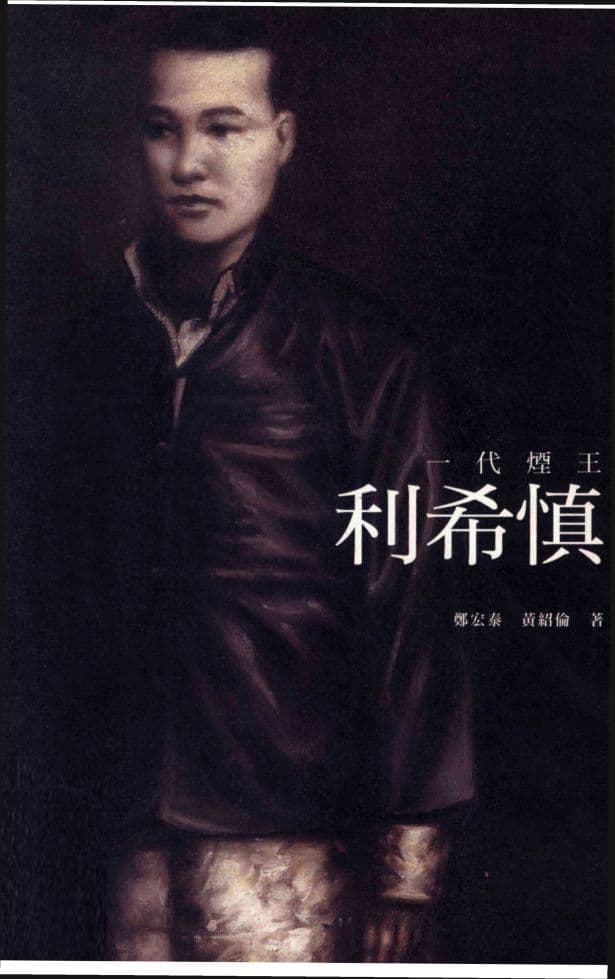
Cheng Hongtai
25 highlights · 11 themes · 4 cited people/companies
Lee Hysan (Li Liangyi), a late-Qing/early-Republican era Hong Kong tycoon who built a fortune spanning opium, real estate, and trade by leveraging his overseas Chinese experience and bold, decisive character to become one of colonial Hong Kong's most powerful merchants.
His fiery, uncompromising personality attracted resentment and potential enemies, leading to 'unfortunate outcomes'—a reminder that decisiveness without diplomacy creates existential risk.
His principle of never retreating when he believed he was right dragged him into costly, extended legal battles that consumed resources and attention.
“Therefore, while exploring how inland immigrants contributed to Hong Kong’s social and economic development, attention is also on the "overseas returning Chinese," even though fewer in number, they contributed significantly. Due to their many years living in the western world, gaining western perspective and capital, upon settling in Hong Kong, they effectively introduced (or absorbed) Western management models, boo…”
“This was due not only to his visionary foresight and acumen but also to his quick decision-making and decisiveness. However, his impetuous and uncompromising personality may also have been reasons for attracting too much attention and potential resentment, which in some cases, led to unfortunate outcomes. For these reasons, I believe it’s necessary to understand his unique character traits.”
“As widely known, the development of affairs connects like a chain, with causes and effects impacting each other. Business activities are similar; our every action and decision cannot occur in isolation from their environment. In other words, the fact that Lee Hysan quickly entered the opium trade after starting his business was not something that could have happened overnight.”
“From 1902 to 1914, the government mixed opium tax revenue with other license taxes and internal revenues, so I couldn’t grasp the changes in opium tax revenue. However, it's believed that during this period, there was a significant increase because in 1915, data showed the opium tax revenue was 4,765,026 dollars, making up 40.43% of the 11,786,107 dollars of the entire government's annual revenue; this was a substan…”
“The significance of Hong Kong and Macau as gateways connecting China to the world had already been established by the late 19th century. This naturally fostered robust trade, financial, and personnel exchanges with overseas Chinese and the Western world. The residents of these regions, living amidst a blend of Eastern and Western cultures, developed adept communication skills, business acumen, and an understanding o…”
“His principle of "reason in hand without retreat," furthermore, led to his first prolonged legal entanglement”
“during his early collaboration, due to his optimistic view of the market's prospects, he adopted a "buy low" strategy. However, some shareholders were concerned and hesitant due to the market's downturn at the time.”
“His swift decision-making, insightful caution, and enjoyment of connections within both the legal and illegal realms indeed provided advantages in business.”
“"appeared modestly, but within was bold," with grand ambitions and a cautious approach.”
“Thus, in 1890, he and his younger brother Li Wenyi left their birthplace, Shuiwell village in Pingxiang, boarding a ship in Fuzhou bound for the "Gold Mountain," San Francisco (historically referred to as "Gold Mountain," and later changed to "Old Gold Mountain" after Australia discovered gold, calling Australia the "New Gold Mountain" to distinguish) to start a new life (Li Dehui, 1995:48).”
“"grandfather, from the start of his business, named himself Hee Sun, hoping to be cautious in action"”
“Vivienne Poy about her grandfather Lee Hysan and father Lee Huai, titled "Roots" (1995) and “Growth” (1998),”
Patrick McGee
Shares Hong Kong, San Francisco, and China.
Tommaso Ebhardt
Shares Hong Kong, China, and United States.
Edited by Nikkei Business Publications
Shares San Francisco, China, and United States.
Barry Diller
Shares San Francisco and United States.
Jackson, Stanley, 1910-
Shares Hong Kong and China.
Thomas Veszelits
Shares China and United States.
“Vivienne Poy about her grandfather Lee Hysan and father Lee Huai, titled "Roots" (1995) and “Growth” (1998),”
“In March 1848, the discovery of gold reefs in the western United States, California, was reported in various publications. News quickly spread to the southern coast, attracting many villagers. In 1849, shipping companies in China published advertisements recruiting laborers to go to the United States for gold prospecting. The advertisement read: "The American people are the richest in the world, and they welcome the Chinese. Once you arrive in the United States, there are big houses to live in, high wages, good clothes, and food... Do not doubt, and immediately embark on the road to prosperity." (Wei Guanzhong, 1977: 1)”
“"They import people like beasts of burden with only one purpose—to work. When the work is done, if they are not dead, they send them back."”
“After the prosperity under Kangxi, Yongzheng, and Qianlong, by the late eighteenth and early nineteenth centuries under Jiaqing and Daoguang, corruption was rising, and the combined power was worsening.”
“Thus, in 1890, he and his younger brother Li Wenyi left their birthplace, Shuiwell village in Pingxiang, boarding a ship in Fuzhou bound for the "Gold Mountain," San Francisco (historically referred to as "Gold Mountain," and later changed to "Old Gold Mountain" after Australia discovered gold, calling Australia the "New Gold Mountain" to distinguish) to start a new life (Li Dehui, 1995:48).”
“According to Li Dehui's accounts, after arriving in the U.S. in 1890, Li Liangyi and his brother found employment at the Union Cigar Company located at 17 Dupont Street in San Francisco.”
“San Francisco, located in Northern California on the west coast of America, was not an ideal location for growing tobacco. However, due to its dry climate (in those air-conditioning-less times), it became favored by tobacco merchants for cigar production, leading to the establishment of production bases there.”
“Hong Kong, and Macao as European colonies provided convenient systems similar to the western world without Western-style immigration restrictions, close to one's homeland. Thus, it became the ideal residing place for many "overseas returning Chinese," drawing numerous individuals to Hong Kong, such as the Wong brothers' Lane Crawford family, the Kwok family of Sincere Co., Ltd., the Eu Yan Sang family of Eu Tong Sen, Tiger Balm’s Aw family, and later the Kerry Group's Kwok family, Sino Group's Ng family, and the Lin family of Lee Kum Kee, serving as prime examples of Hong Kong's rise as a commercial and trade center.”
“Therefore, while exploring how inland immigrants contributed to Hong Kong’s social and economic development, attention is also on the "overseas returning Chinese," even though fewer in number, they contributed significantly. Due to their many years living in the western world, gaining western perspective and capital, upon settling in Hong Kong, they effectively introduced (or absorbed) Western management models, boosting local enterprises' overall competitiveness. Their roots and experience in the West also positioned them perfectly as intermediaries expanding overseas trade, playing a crucial role in Hong Kong's emergence as a global business hub.”
“"In those days, the two brothers moved to Hong Kong... established Xichanglong Company at 202 Queen's Road Central. My great-grandfather and grand-uncle often traveled between Hong Kong and home," and the company's main business was "importing blue cotton from the British, selling it to Hong Kong residents." The term "blue cotton" refers to "indigo denim," a primary fabric used by the general public for making clothes (Li Dehui, 1995: 25), in considerable quantity.”
“The significance of Hong Kong and Macau as gateways connecting China to the world had already been established by the late 19th century. This naturally fostered robust trade, financial, and personnel exchanges with overseas Chinese and the Western world. The residents of these regions, living amidst a blend of Eastern and Western cultures, developed adept communication skills, business acumen, and an understanding of global trends, which not only contributed to China’s self-reliance in the last century but also played a significant role in the national rise of this century.”
“Ho Sai Shing”
“This was due not only to his visionary foresight and acumen but also to his quick decision-making and decisiveness. However, his impetuous and uncompromising personality may also have been reasons for attracting too much attention and potential resentment, which in some cases, led to unfortunate outcomes. For these reasons, I believe it’s necessary to understand his unique character traits.”
“"appeared modestly, but within was bold," with grand ambitions and a cautious approach.”
“"grandfather, from the start of his business, named himself Hee Sun, hoping to be cautious in action"”
“"Lee Hee-shun was described as a godfather with a rugged appearance wearing tunics and kung fu shoes, strict with rules in both the legal and illegal sides, liking arguments and having a fiery temper, leading to conflicts."”
“Confucius said, "Water can carry a boat; it can also overturn a boat."”
“His swift decision-making, insightful caution, and enjoyment of connections within both the legal and illegal realms indeed provided advantages in business.”
“"Character determines life, which can influence the development of family matters left and right."”
“during his early collaboration, due to his optimistic view of the market's prospects, he adopted a "buy low" strategy. However, some shareholders were concerned and hesitant due to the market's downturn at the time.”
“His principle of "reason in hand without retreat," furthermore, led to his first prolonged legal entanglement”
“The unique background allowed prominent merchants who built fortunes on opium, like Jardine, Matheson & Company’s Matheson and Jardine, Mody and Company’s Mody, Belilios and Company’s Belilios, and the Sassoon families, as well as the Ho family, to become influential figures of the era. Smoking opium was considered commonplace, nothing unusual.”
“From 1902 to 1914, the government mixed opium tax revenue with other license taxes and internal revenues, so I couldn’t grasp the changes in opium tax revenue. However, it's believed that during this period, there was a significant increase because in 1915, data showed the opium tax revenue was 4,765,026 dollars, making up 40.43% of the 11,786,107 dollars of the entire government's annual revenue; this was a substantial increase from the 16.30% in 1901, nearly one and a half times more. From 1916 to 1919, the opium tax revenue still maintained a level of over 40% of the government's annual fiscal revenue. In 1919, it drastically dropped to 29.39% in 1920, 14.91% in 1925, and 10.19% in 1930 due to the British Hong Kong government's agreement on the policy to gradually abolish the opium trade (Table 3.1).”
“As widely known, the development of affairs connects like a chain, with causes and effects impacting each other. Business activities are similar; our every action and decision cannot occur in isolation from their environment. In other words, the fact that Lee Hysan quickly entered the opium trade after starting his business was not something that could have happened overnight.”
“"Worldly turmoil arises from profit; worldly peace comes from profit as well."”